
Bomber Command
Portraits and the stories of three men who flew with Bomber Command in WW2 — Fred Crawley, Sidney Beaver and Ben May — and the airfields, aircraft and landscapes they flew from.
I have been very fortunate to have met some astonishing people, and how I met them was often by chance or luck. I never thought that having dinner at my folks’ house would send me on a journey that took nearly two years, a journey where I would be able to sit and talk with those who had actually seen WW2 from the air. Over those two years I met three lovely gents who gave me their time to reflect on some of the horrors they had personally witnessed whilst airborne over Britain and Europe.
I spoke to them some 60 years after, in their own homes, as they drew towards the end of their own time. I knew that I would never have the opportunity to meet anyone like them again. All three men were very different in character, stature and charisma; the thing they did have in common was that they lived in the south-east of England.
During the journey I built wonderful relationships with them as they delved back into the past, which I could see was distressing and emotionally draining for them, but we also had some smiles from stories that encouraged them during the war. Their courage 60 years later was just as strong as when they were flying on missions.
We must never forget their stories. We need to remember all the sacrifices they made, for the sake of future generations, so we understand why we live in a free society in Britain.
Lest we forget
They answered the call
With mighty hearts, they took a stand
In the pursuit of liberty
They died on foreign land.
Those that made it home
Carry a burden within their soul
More years behind them now
Yet stories remain untold.
We may never understand it
Few hearts can comprehend
The courage one must possess
To rise and take a stand.
So I ask of you this
Dear friends and family
How will you remember
This most earnest legacy?
Will you bow your head in silence?
Offer a silent prayer?
Let’s honour all they’ve sacrificed
For the freedoms we hold dear.
Fred Crawley
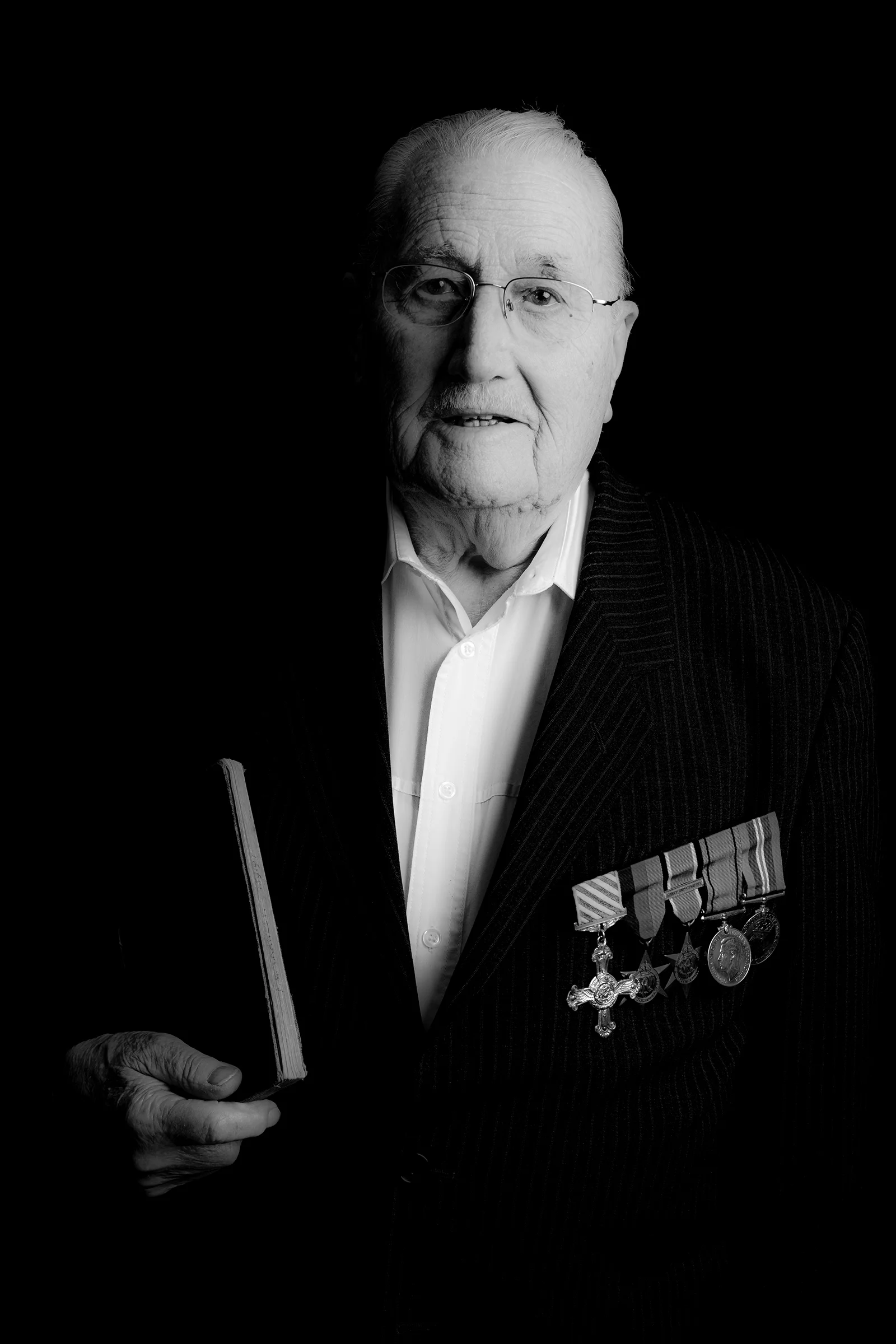
Fred Crawley was born in 1920 and grew up in Edmonton, in the county of Middlesex, now part of Greater London. He came from a poor background and went to Rainham School, where he won a scholarship which gave him the opportunity to go to the acclaimed Latymer School. Once Fred left school he joined the North Metropolitan Power Company in Southgate in 1937. This was very short-lived: as he anticipated, war was coming, and Fred joined the RAF a year later, in 1938.
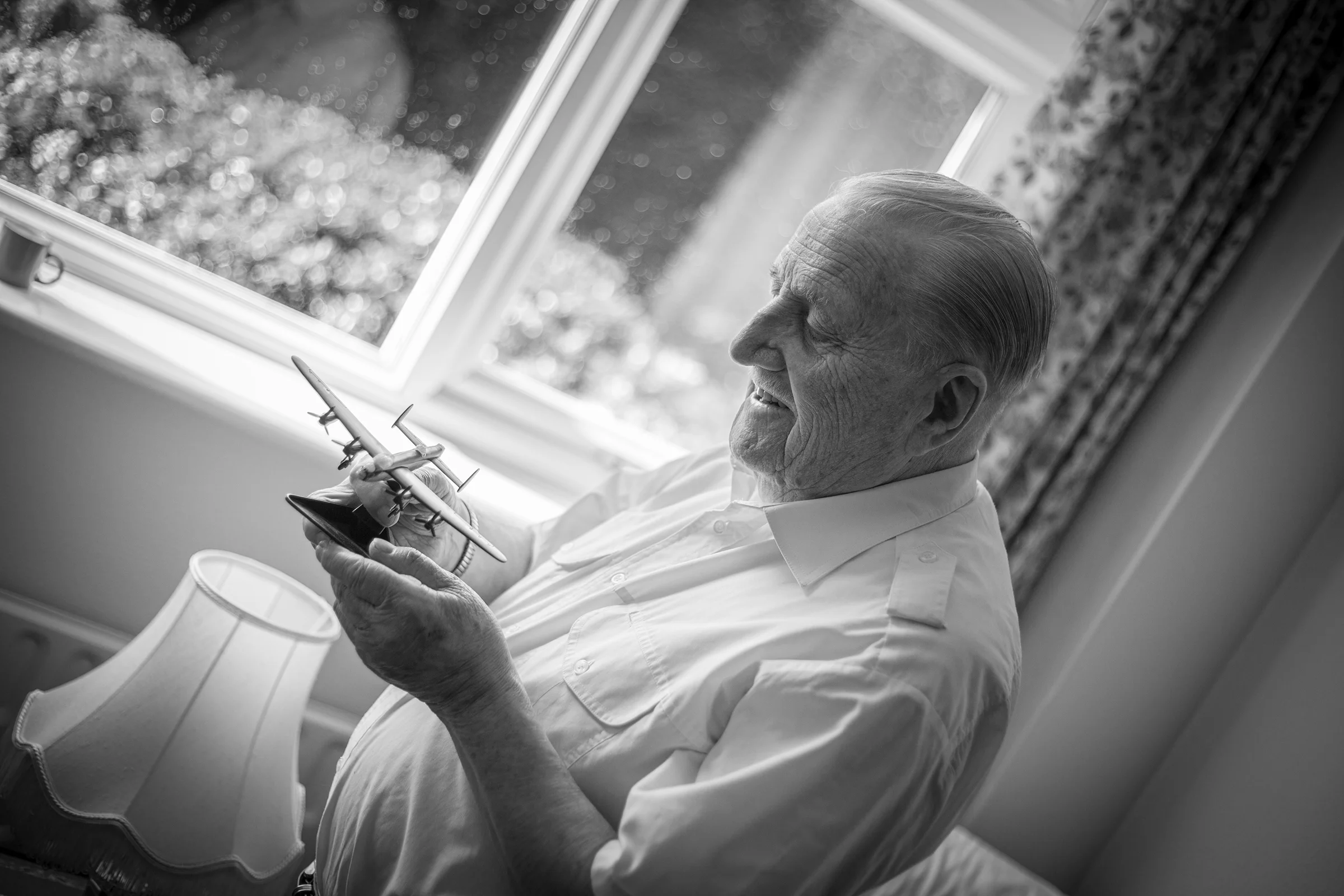
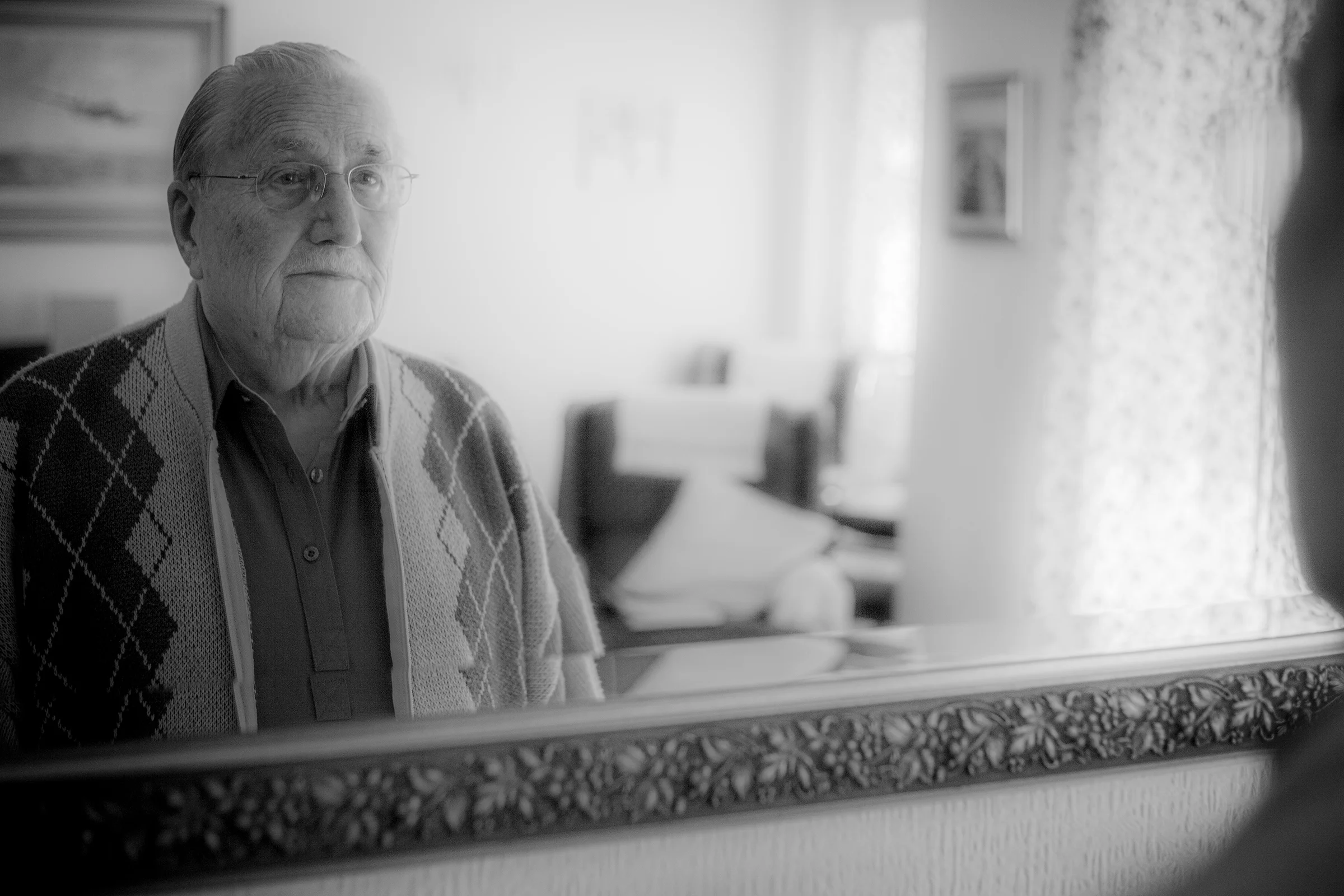
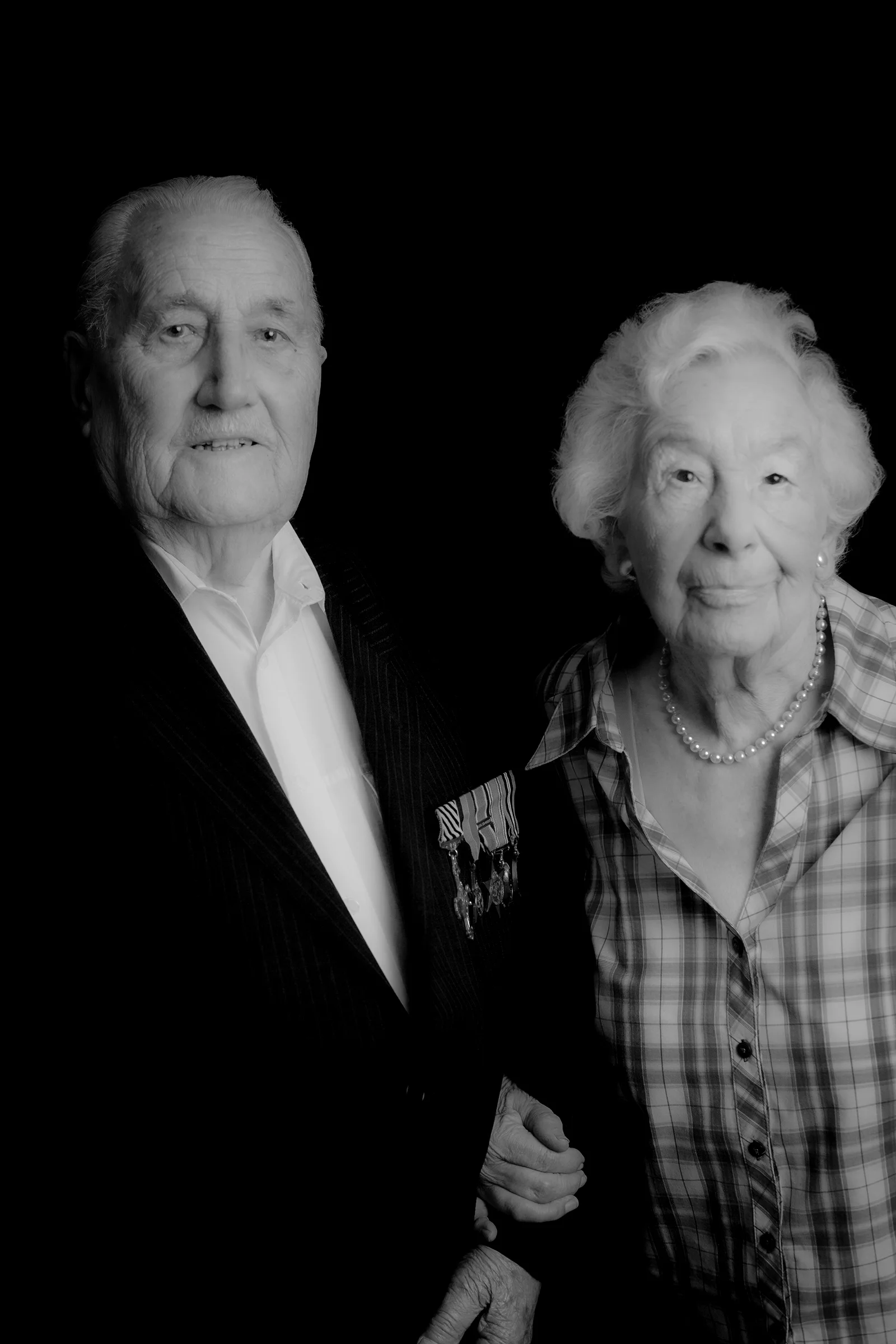
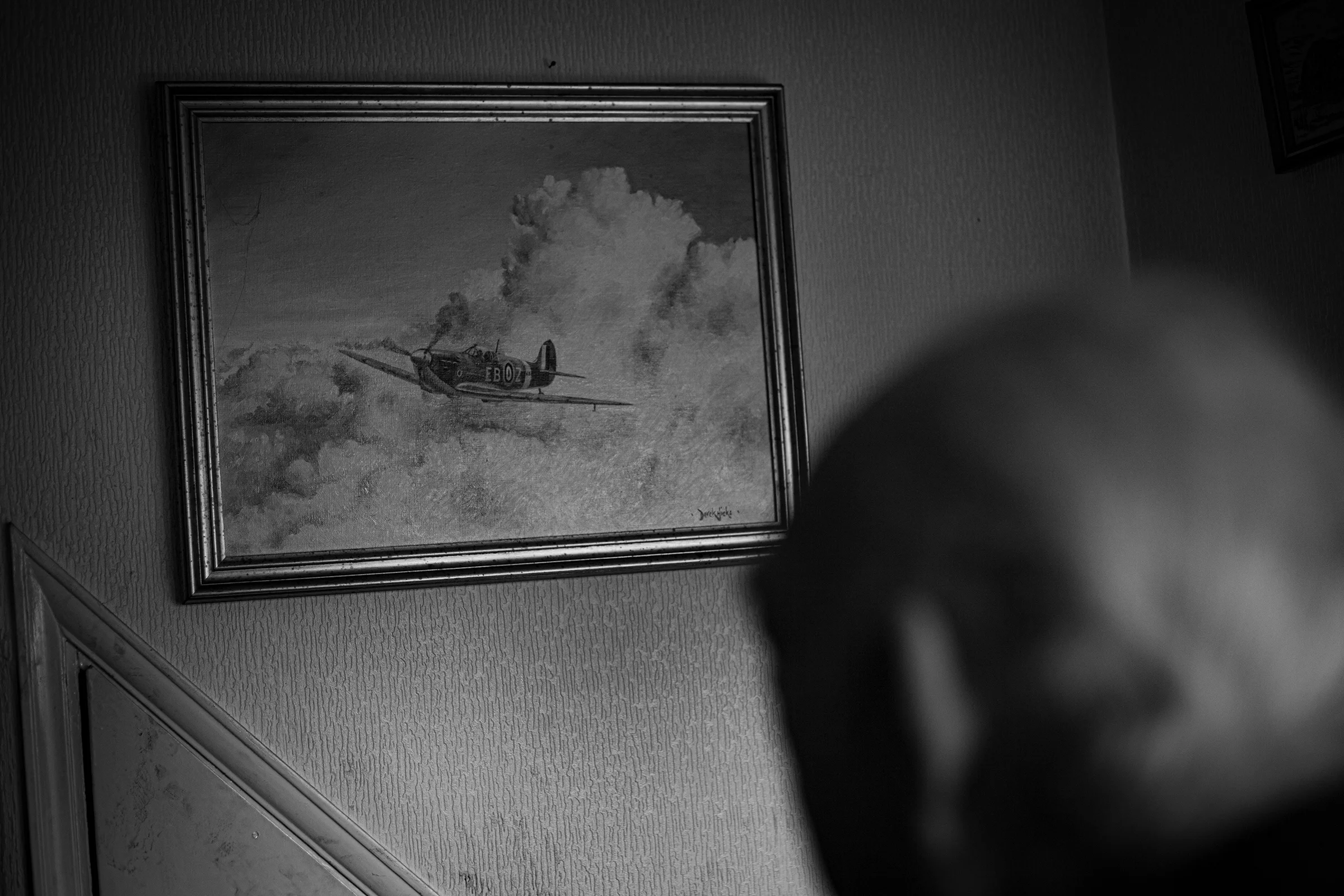
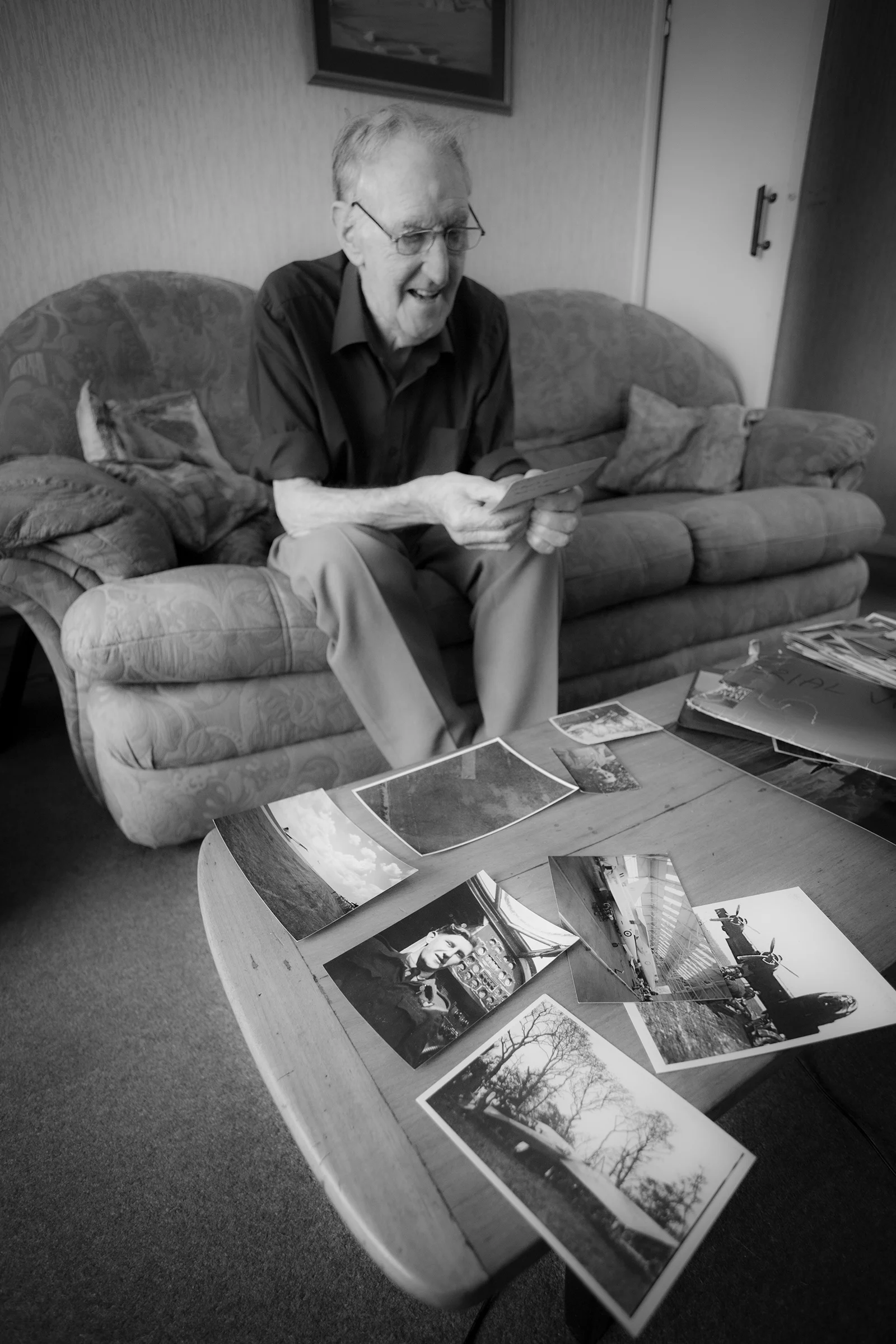
Fred lived with his wife Joyce; they were childhood sweethearts. They lived in Bush Hill Park, and my mum was a friend of theirs. Sometimes Joyce would ask her to make curtains, and my mum would take her shopping from time to time. In their late 80s they had an apartment-type flat, immaculate inside, with paintings of planes on the walls and Fred's piano in the living room. It was a lovely, relaxing place to visit. You could see by the way the house was presented that it was well orchestrated, all the furniture in order and in a position that suited it, in the way I can imagine Fred would have worked, taking pride in everything he did.
My mum asked Fred if it would be possible for me to interview him about his RAF background and take some photographs of him at home. I think the only reason he accepted was the nature of their personal relationship, and that there would be no pressure from me; for me it was simply an honour to spend time with someone who had personally seen WW2 from the air. To really show what sort of chap Fred was: on my second visit I had arranged to come with my mum at 10.30am so that she and Joyce could go shopping together. As I sat down, Fred was looking at himself in the mirror while putting on his tie. He asked how I was, and I told him I had just passed the first part of my teacher training course. He congratulated me in the mirror, walked over to a whisky decanter, picked it up with two crystal glasses, put them on the table and sat down with me. 'Well done, Lewis,' he said, poured us a glass each and said 'Cheers'.
Over the next two months Fred and Joyce would both tell me their stories: the journey of two childhood sweethearts separated by war, and of course Fred's experiences with the RAF.
The RAF
Fred was an instructor; his job was to train those who would eventually fly over Europe on bombing raids. In 1939 he was due to be deployed with 12 Squadron to France, but during a training session the trainee crashed the plane and Fred could not go because of his injuries. I will never forget Fred saying that when 12 Squadron eventually returned, only one person had made it. Luck had been Fred's fate. Fred did say to me that at times he was more frightened by the training than by going on missions, because he was training people who may not have been suited to flying. Fred trained hundreds who, in his words, 'had damaged Germany'.
Later that year he replaced a navigator who was sick and was sent on his first mission, in a Lancaster bomber. He flew to a crucial mining location by the Port of Gdansk, where they dropped their payload. In Fred's mind this was a crucial target for the success of the war: once the port was bombed it was out of action for months, causing Germany a significant problem.
Fred told me about a mission that he believed, had it not happened, might have let the Germans win the war. The Germans were planning to wipe out London in a very short space of time. Peenemünde was where Hitler was building the V1 and V2 rockets, and Fred explained that these rockets had enough fuel to reach the UK. These pilotless aircraft were awful, since they could inflict considerable damage, and we were very lucky to have found out where they were. Fred painted a picture in my mind of what followed: he led 800 aircraft and was the marker pilot for the first bombers to drop their huge payloads, twenty-five bombs on each aircraft, each bomb weighing 1,000lb. In Fred's words, 'This advance of science needed destroying and we did it. It saved our bacon.'
The raids on Hamburg were very vivid in Fred's mind: two days of constant bombing over the city. The whole place was an inferno, and by day three the heat was so strong it created electrical storms. 'Hamburg was astonishing. We just kept dropping bombs, even into the fires.'
During another visit Fred discussed the briefings in a little more depth. In his mind Berlin was only bombed because Hitler bombed London first. 'It was the worst thing he could have done,' Fred explained. The briefings were given by the Commanding Officer: all aircraft must go, seven to eight hundred of them. The missions were meticulously put together, Fred explained, with waves of aircraft all flying at different heights so they did not collide with each other. His flying height for the mission over Berlin was 4,500ft. The pilots would have their own briefings, and then the gunners would get theirs. 'I have often wondered how many of us ended up colliding during that mission,' Fred said, sitting in his lounge. 'As the marker I was always 15 minutes in front with the target finders. We would liaise back with wind direction, times to target and so on.'
After the War
Fred was assigned to Italy, and he said this was the best job he ever had. 'I had the job of getting as many people back to Britain from the war as I could. I lived in Foggia for three years, where I was in charge of three runways; some days 700 aircraft would use them. In 1945 I was demobbed with honours and given the most horrendous suit to wear,' he laughed. Fred's main intention was to find Joyce, his childhood sweetheart.
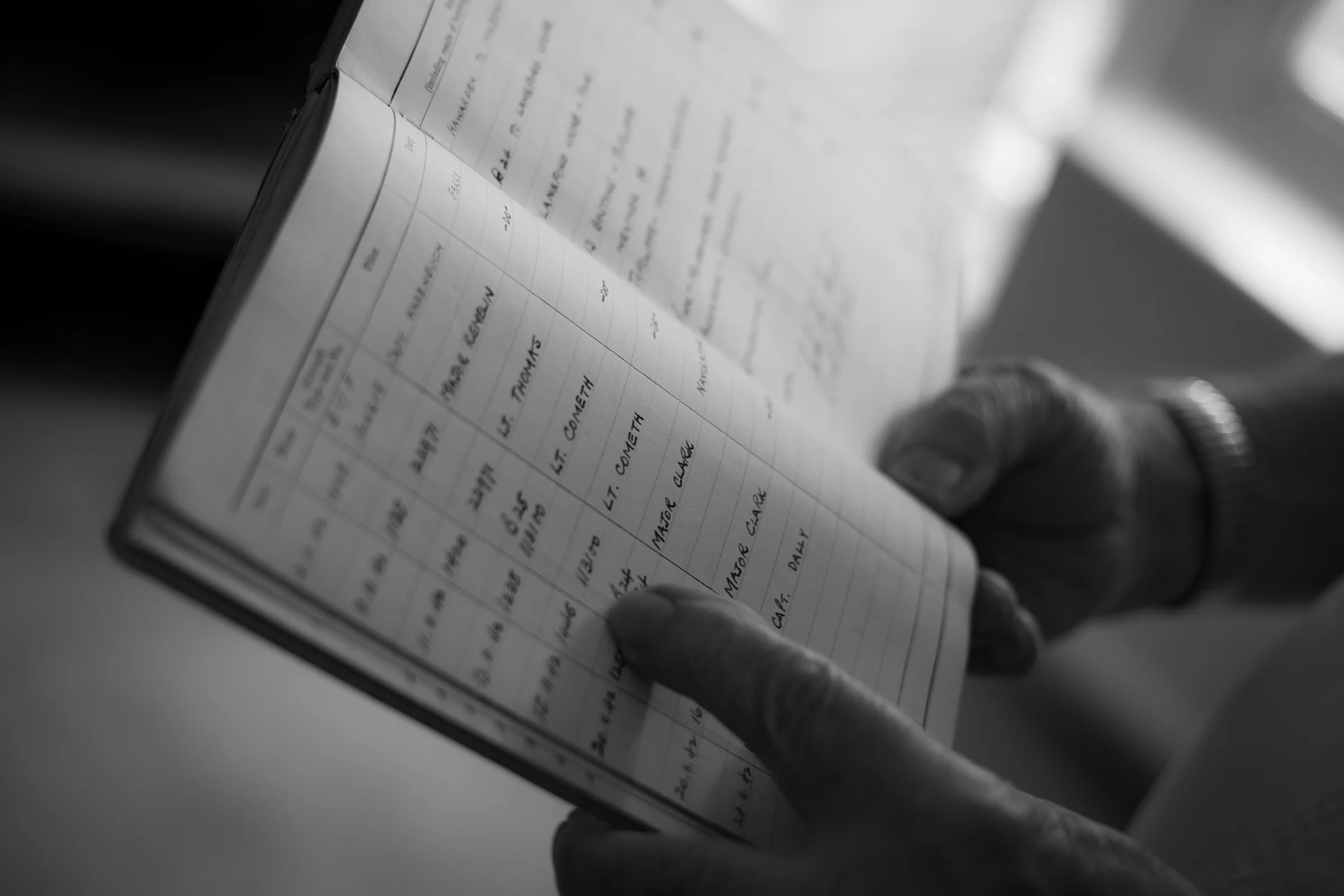
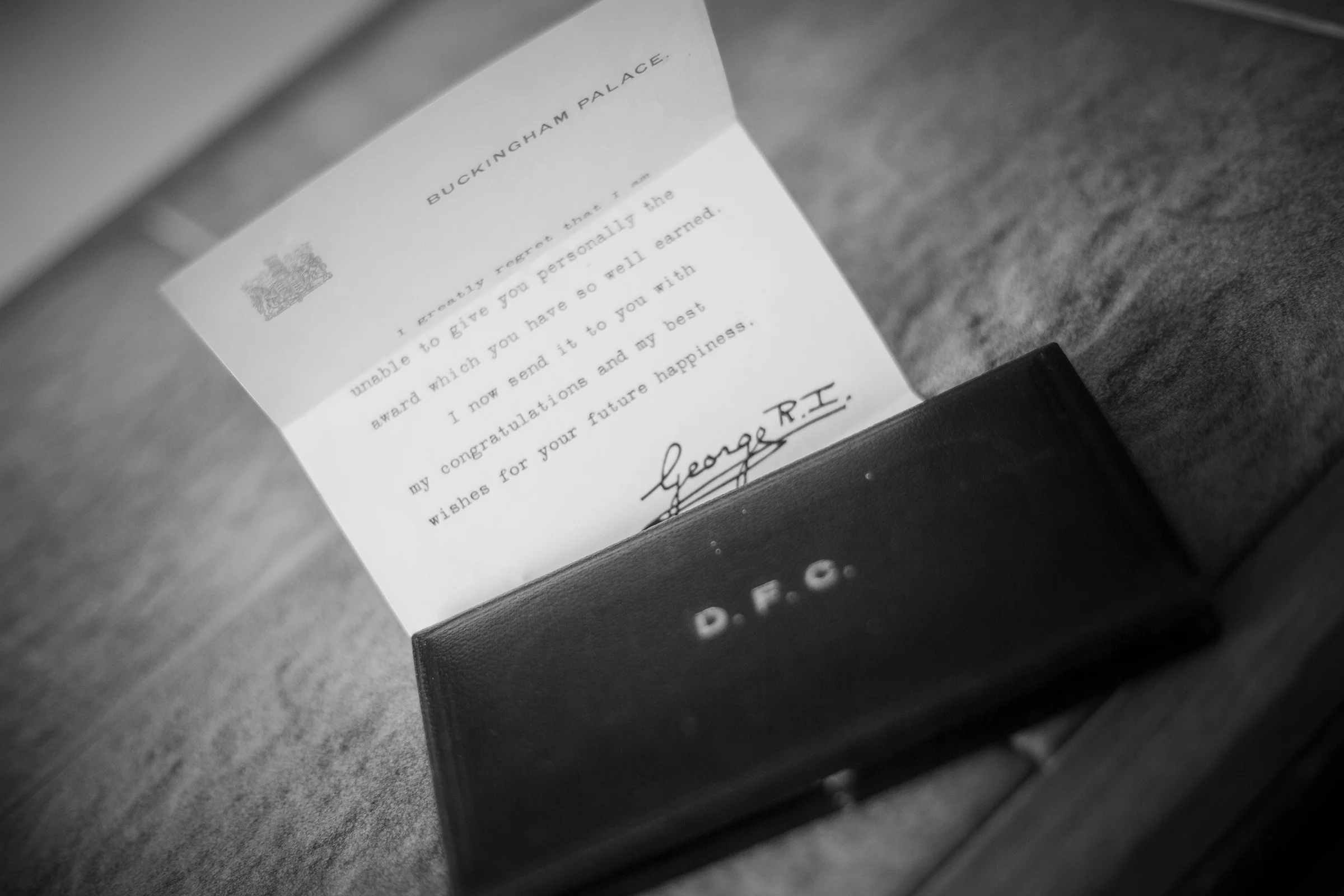
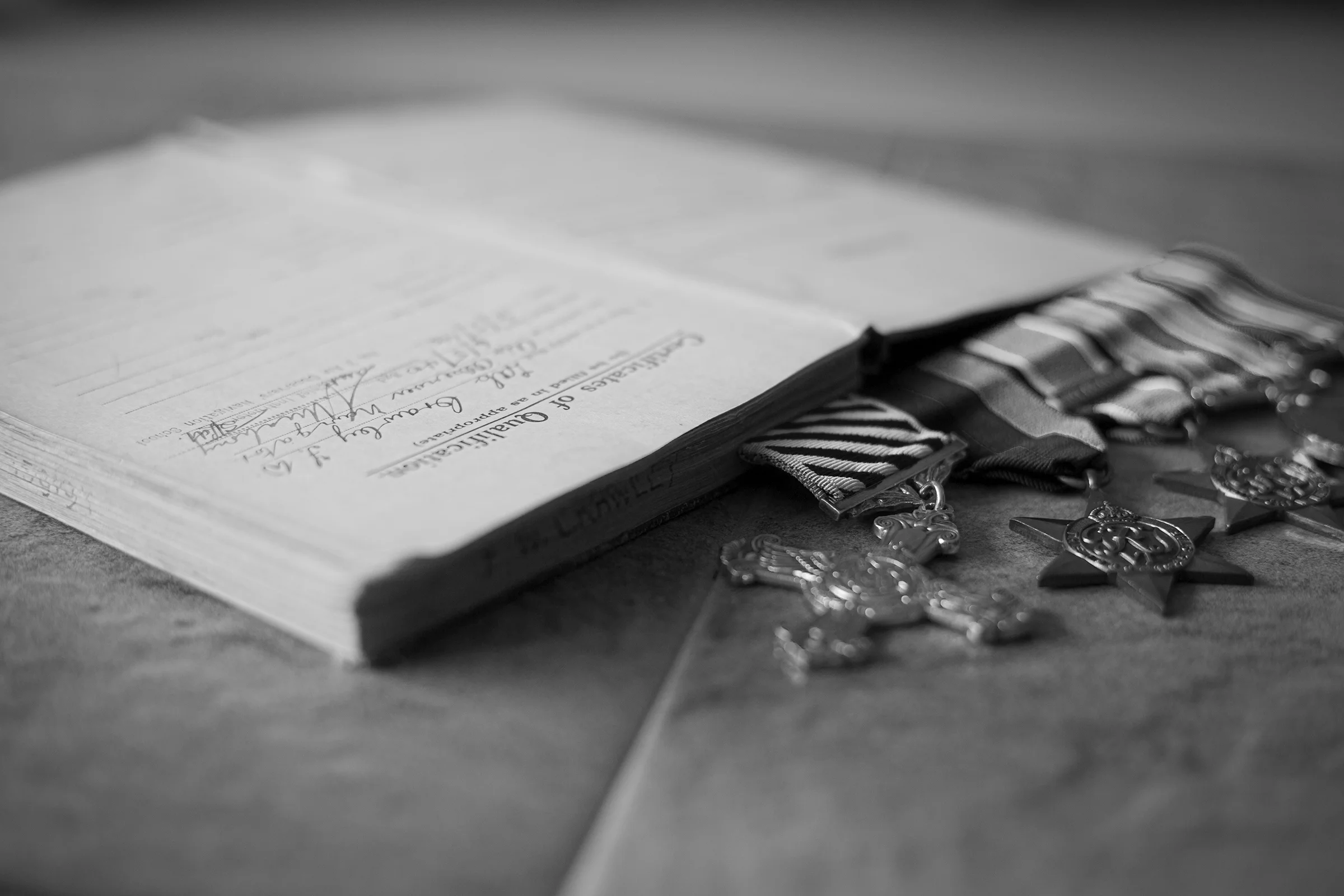
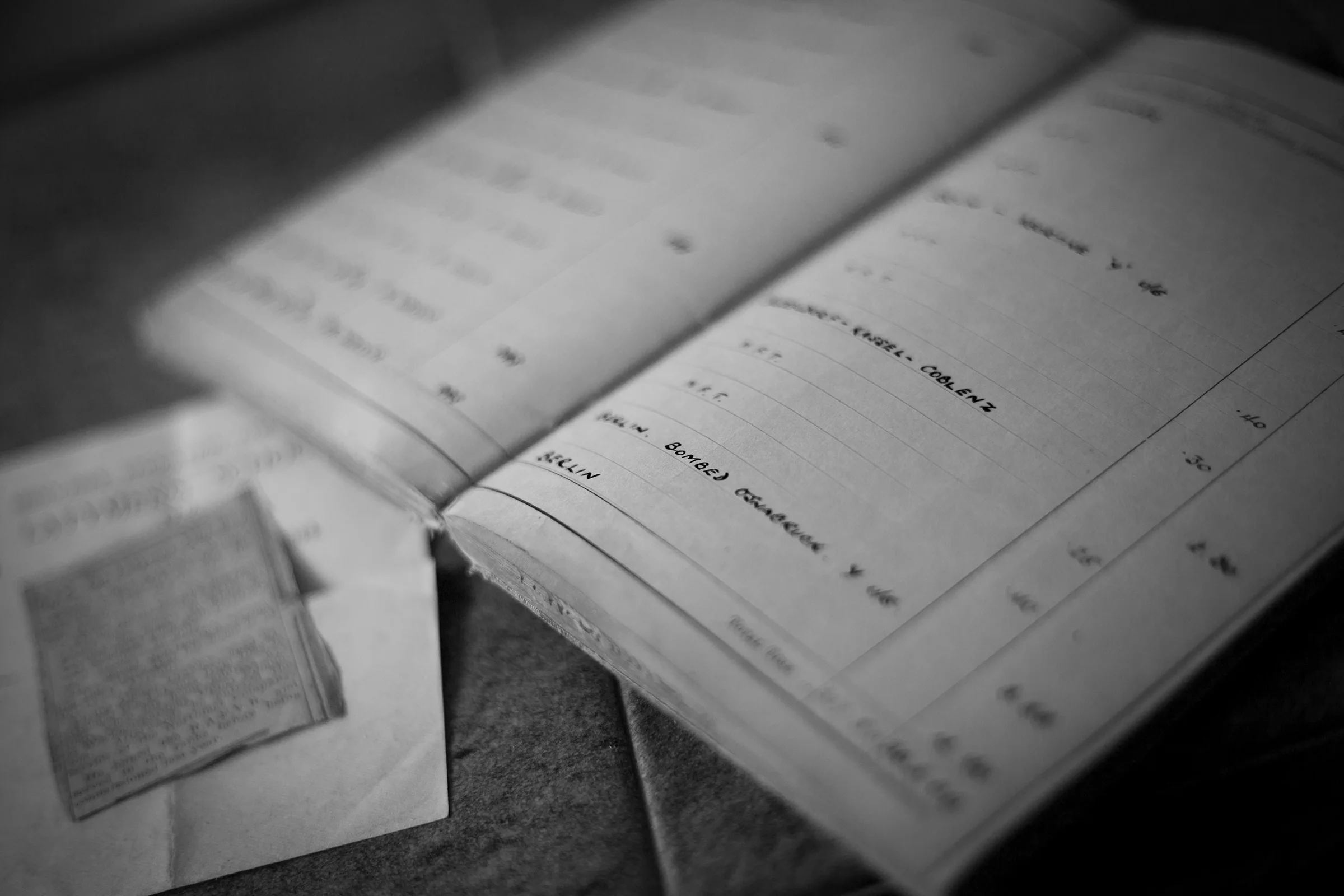
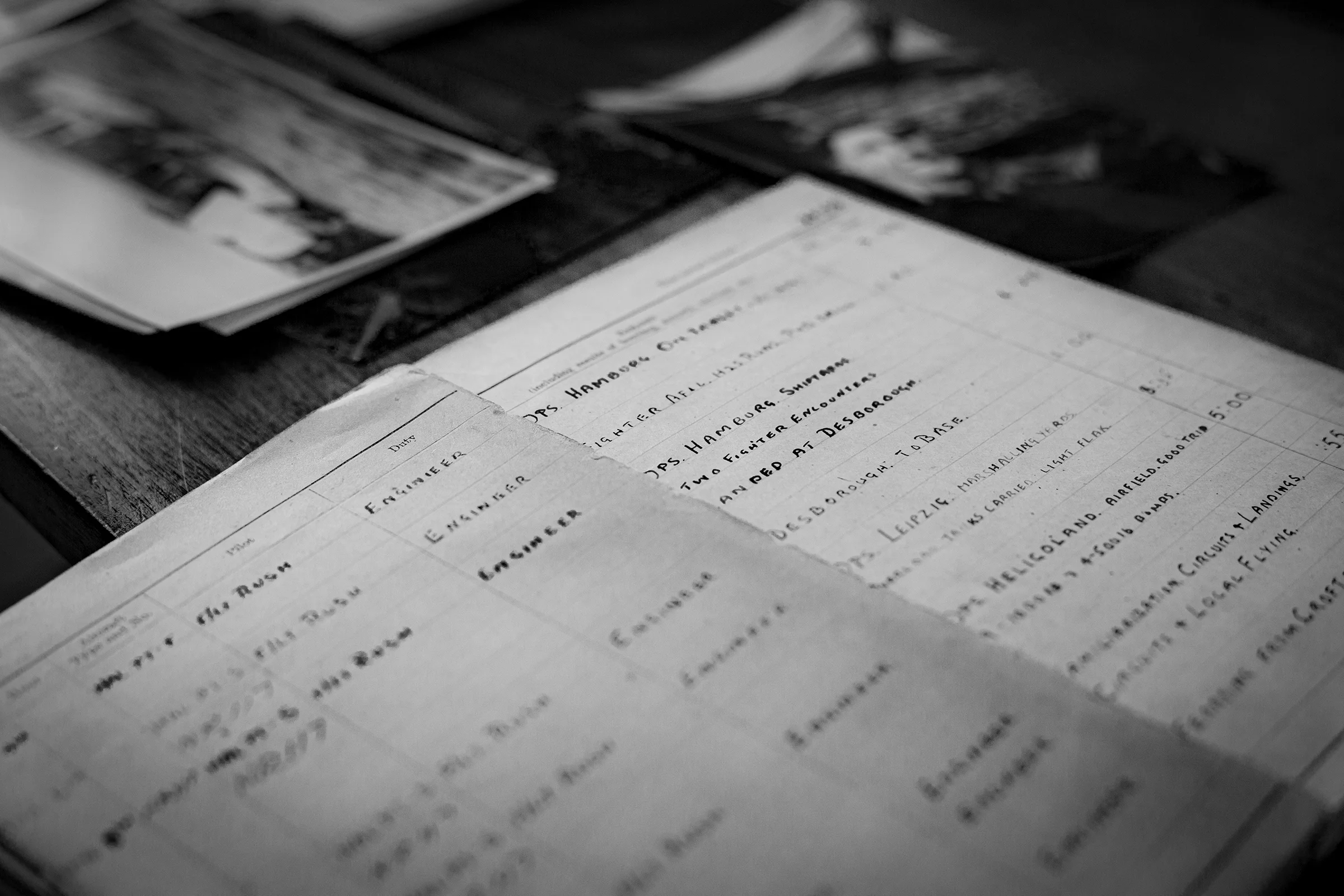
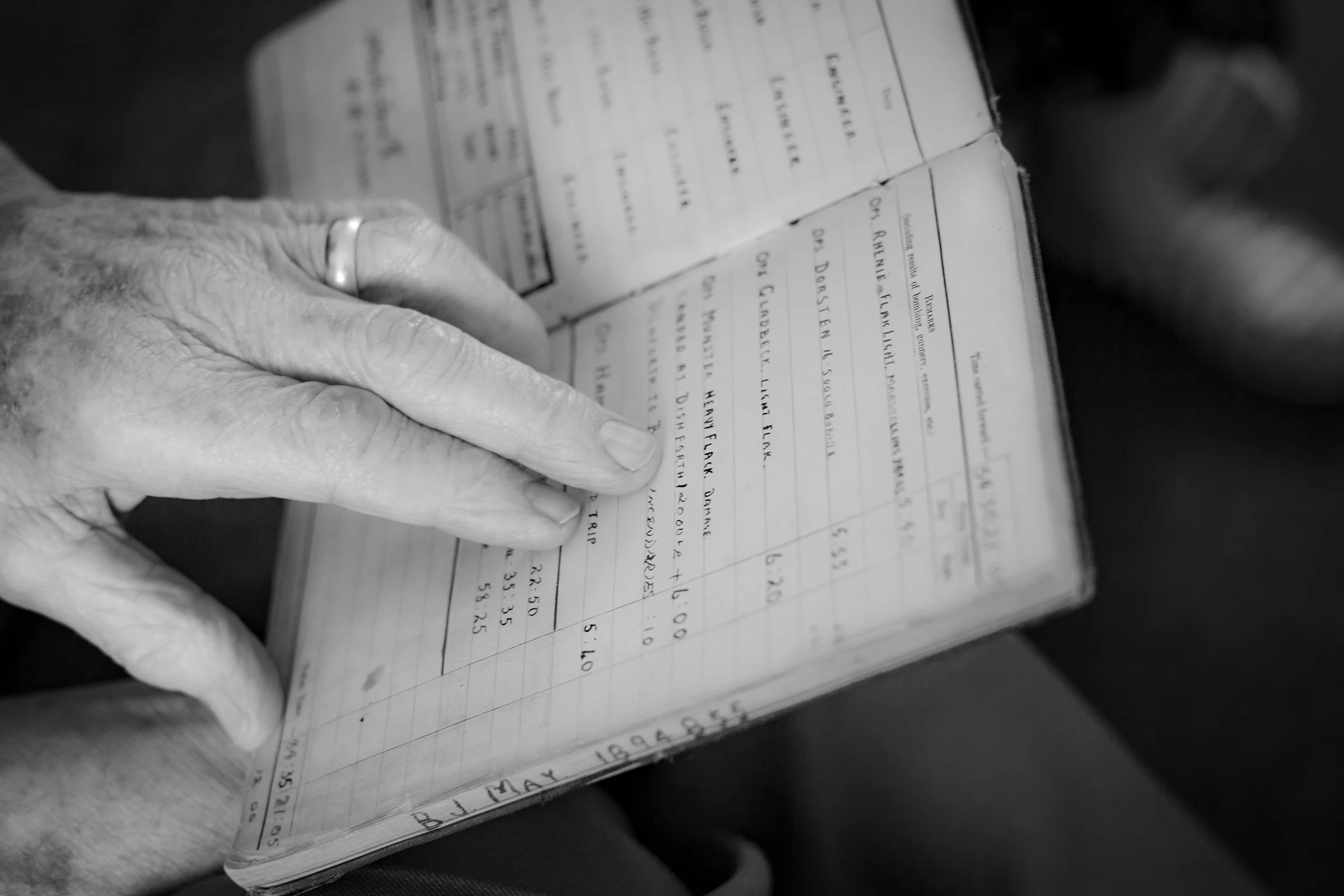
There were many things for me to look at, and I was able to hold an important document: a personal signed letter from the King to Fred for his contribution to the war. There were many medals and, of course, Fred's historic mission logbook, in pristine condition, with missions in red writing and training flights in black.
Fred gave me a hugely honest insight into the war. His journey was incredible: he flew 76 missions, when most were lucky to survive just 10.
Meeting Fred changed my life. I became fully aware of the incredible journey people had to face during this period of history. In my mind I was thinking this must have been horrific, but the belief and passion of the people drove them on against Hitler and Germany. That is something I wish I could recognise in society today. To be honest, I can't even remember it being spoken about in school.
It was a true privilege and honour to be able to spend time with Fred in his own house, discussing things that most would want to forget.
Joyce Crawley
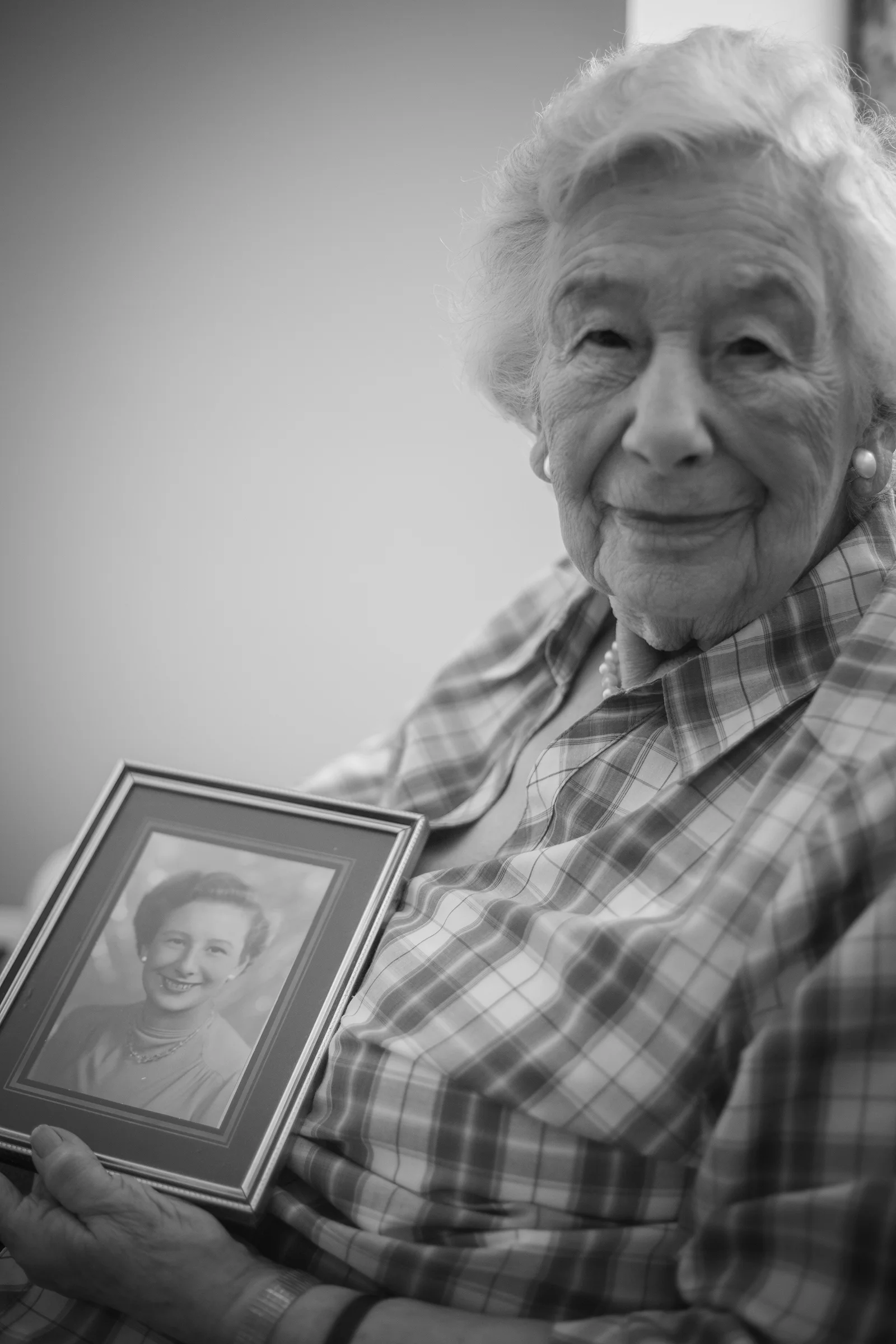
Joyce was a delightful lady, very polite, kind and always well presented. Joyce made a great cup of tea, often given to me in quaint china cups and saucers. Joyce and Fred grew up as children together, their mothers going to the same church in Middlesex. Later Joyce moved from Edmonton to Palmers Green, so they did not often see each other.
Life and war separated them both. Joyce moved to Dorking but would return to London on occasion. Dorking was bombed so badly that Joyce moved back to London, and at the age of 22 she worked for the British Oxygen Company.
When the war had finished, Fred found out where Joyce was living, hired a car and drove over to her house. 'Unfortunately for Fred, I was not in, so he returned home,' she explained. This did not stop Fred: he came back, found Joyce at home and took her out for afternoon tea. Fred explained to Joyce that he was to be sent to Foggia in Italy, where his job was to get as many personnel back to the UK as he could. I can only imagine that Fred asked Joyce if she would wait for him to return, and he took a photograph of Joyce with him to Italy.
Joyce explained that Fred returned three years later and they started to go out as a couple. They married soon after and spent the rest of their lives together.

Sidney Beaver
After meeting Fred I was really interested in finding others who had served on aircraft during WW2. Fred's stories were incredible, and I knew there were not going to be many people left who could give me an insight into the war from the air. At the time I was living in Kent, and I visited the Shoreham Aircraft Museum, only 20 minutes' drive away. The people running the museum guided me and put me in touch with a gentleman whose neighbour was a WW2 veteran, and this chap kindly introduced me to Sidney.
I grew up as a barrow boy in London; we were always larking about on the fruit stalls, flirting with the ladies, gambling, drinking and being generally mischievous. Sidney was definitely the sort of chap who was one of the boys. He had a very mischievous personality and enjoyed larking around, and we got on instantly.
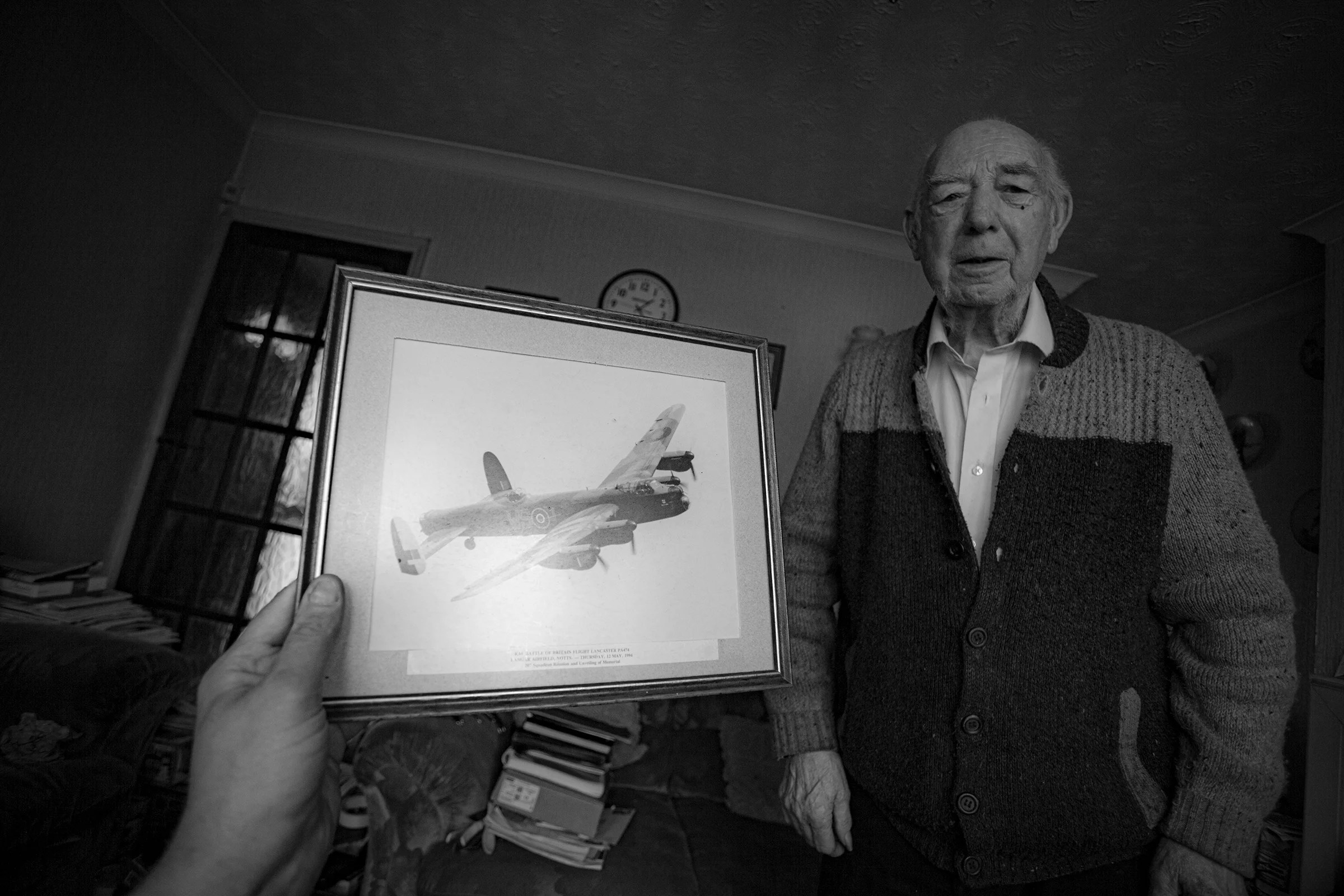
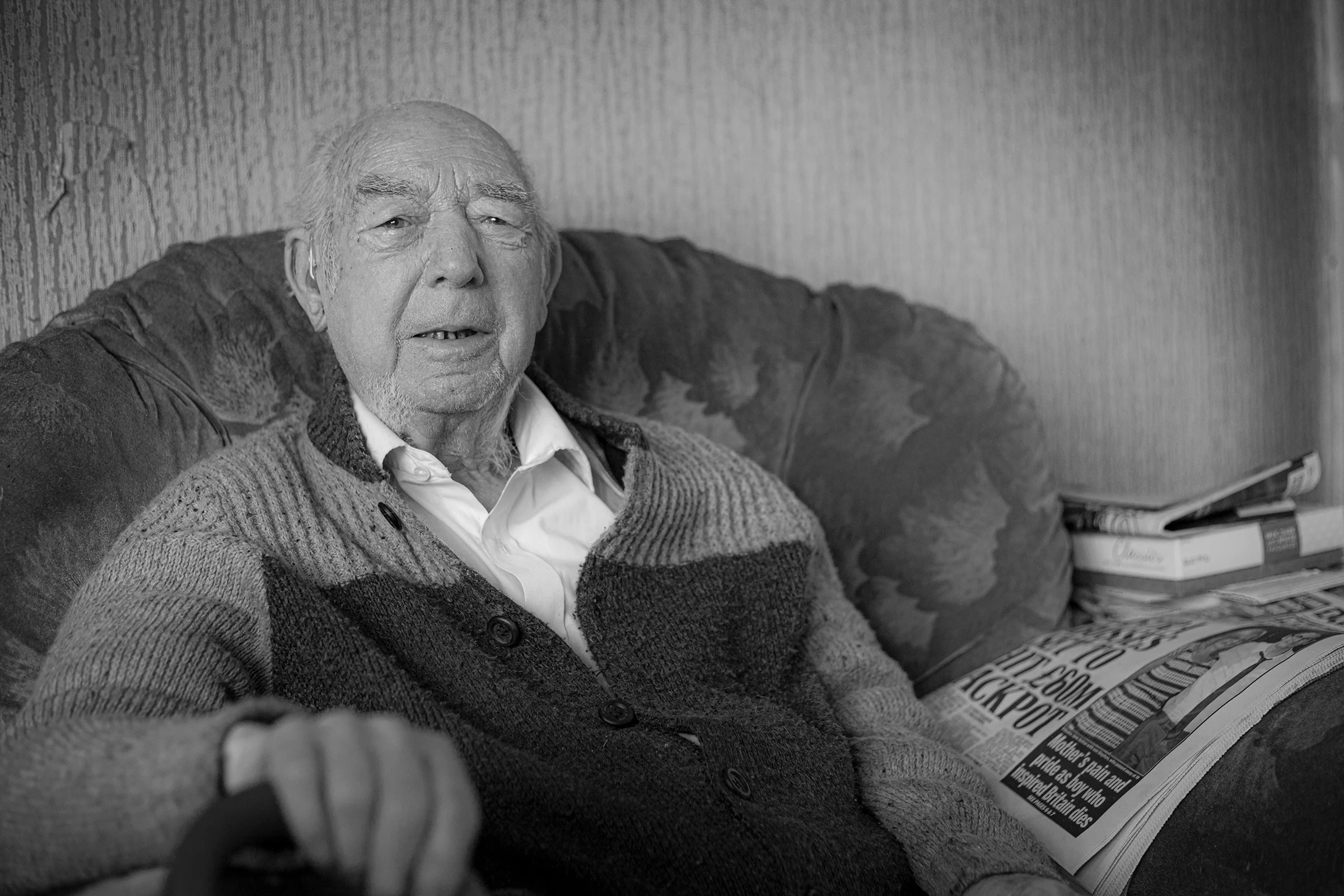
Sidney was 80 years old when I met him. He lived alone, as his wife had passed many years before. His neighbour, whom I met through the museum, had asked him if I could come round and interview him; Sid was more than happy for me to visit, so we arranged a day. I ventured to the suburb of Welling, in the London Borough of Bexley, rang the bell, and an elderly man answered the door. His eyes were scrunched tight as if to get a better focus on me. "Hello Lewis," he said, as if we had been friends for years, and he invited me in. The first thing I noticed was that Sidney's house was like a museum; there was stuff everywhere.
Sid was born at number 3 King James Street in Greenwich and lived there until 1938/39, when his father's instrument company moved to Sheffield. He found Sheffield quite a difficult change: they were not really welcomed by the locals, and were looked down upon as outsiders. Sid explained that the redeeming point of living in Yorkshire was going to an air training school locally. Sid loved it there, but they were extremely disciplined and he had to be on his best behaviour at all times. From there he joined the Air Training Corps, as he did not want to end up in the pits; the thought of working underground was not what he wanted, and so he ended up being based at Finningley. Sid nearly joined the Navy, but what put him off was landing planes on ships. 'It really was not for me!' he said.
After joining the RAF as a volunteer, Sidney spent time flying Tiger Moths and Harvards at Rissington and Old Sarum. These flying experiences were at times a little hazardous, but also a lot of fun. He was advised by a squadron leader that his prospects would be better with Bomber Command. 'He conned me,' Sid said. 'He never explained to me about the casualty rate of joining Bomber Command,' he chuckled. Sid flew 15 missions; he was shot down on his 16th.
Mission 16
"We flew out of Spilsby in Lincolnshire; the noise from the four Merlin engines was amazing. We all formed up over Mablethorpe, where 500 aircraft could be together, two waves of aircraft being formed. The master bombers would take the lead, dropping 4,000lb of Amatol, a high explosive that spread fire. It was an eight-hour round trip to Berlin. The ground crew got the plane ready for take-off; they were the unsung heroes of the war, and we could not have done it without them. They worked on the hard standing in all weather, at all times of day.
"We were airborne, and Holland was our point of entry. As we entered France, night fighters became a real menace; they were peppering us with bullets. I was flying the aircraft with my friend and wireless operator Jimmy Taylor, and we had to shut down one of the engines as it was overheating. All of a sudden another night fighter appeared. I have no idea where he came from, but he hit us. He hit our engines and one side of the plane was on fire. He also hit our gunners, who both died; their names were Cooper and Collins. I, Jimmy Taylor, Bob Web, George Seable and Rawlins tried bailing out, but getting to the parachutes was terrible as the plane was falling out of the sky. I was the last to leave, but I remembered that we had left little Henry in the cockpit. He was our crew mascot; we never went anywhere without him. He had been left in a previous crew's room, and when they never returned we adopted him. I ran back and got him, and he stayed in my top pocket.
"Being the last one out, I ended up split from the crew. I landed in a field in France, and thankfully there was an outbuilding where I hid for a few days. I was terrified during those first few days; I had no idea what to do and the place was crawling with Germans. I was also concerned about the farmer's family. He allowed me to stay in the outbuilding, but I was putting his whole family at risk. I left and was on the run for ten days. I stayed away from towns and villages and ate out of dustbins. Luckily I found an abandoned villa which had food inside. I used the villa to lie low for a few days and then found a map and compass. How I managed to get back to the UK without being caught was a miracle."
After the War
Another astonishing story he told me was about a visit back to France for an event of remembrance. It had been organised many years after the war had finished, and Sid returned to the town where he had been shot down on his last mission. On the first day, whilst in the crowd, Sid ended up speaking to a French chap who was the curator of the local museum. The chap invited Sid to the museum the following day. When he asked why Sid had attended the event, Sid explained that he had been shot down over the area. They discussed Sid's aircraft and, by sheer luck, the curator took Sid to an exhibition of a Lancaster cockpit from the war. It was the very cockpit Sidney had run back into to grab little Henry, who was nearly left behind. He gave Sid some parts of the cockpit to take home, and they stayed with him until the end of his life.
My Notes
A year after meeting Sid I moved to Wales, and there have been many times I have thought about him. I was very fond of him; he was a very funny and at times cheeky old boy, especially towards my wife, with whom he had the odd flirt. It does sadden me that I did not speak to him before his death, but I am very grateful for the time I did spend with him. He changed the way I viewed life, and I am thankful we shared time together.
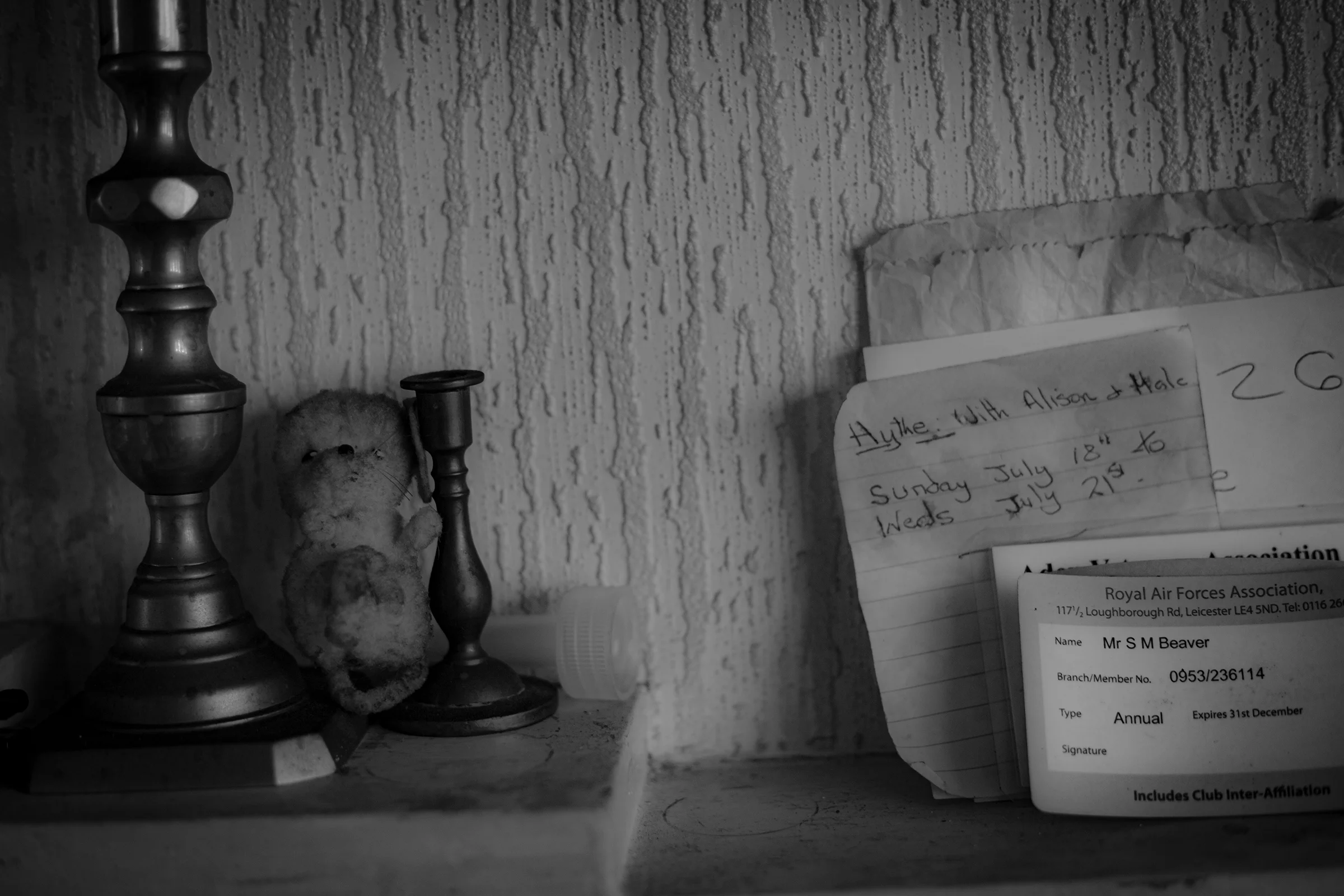
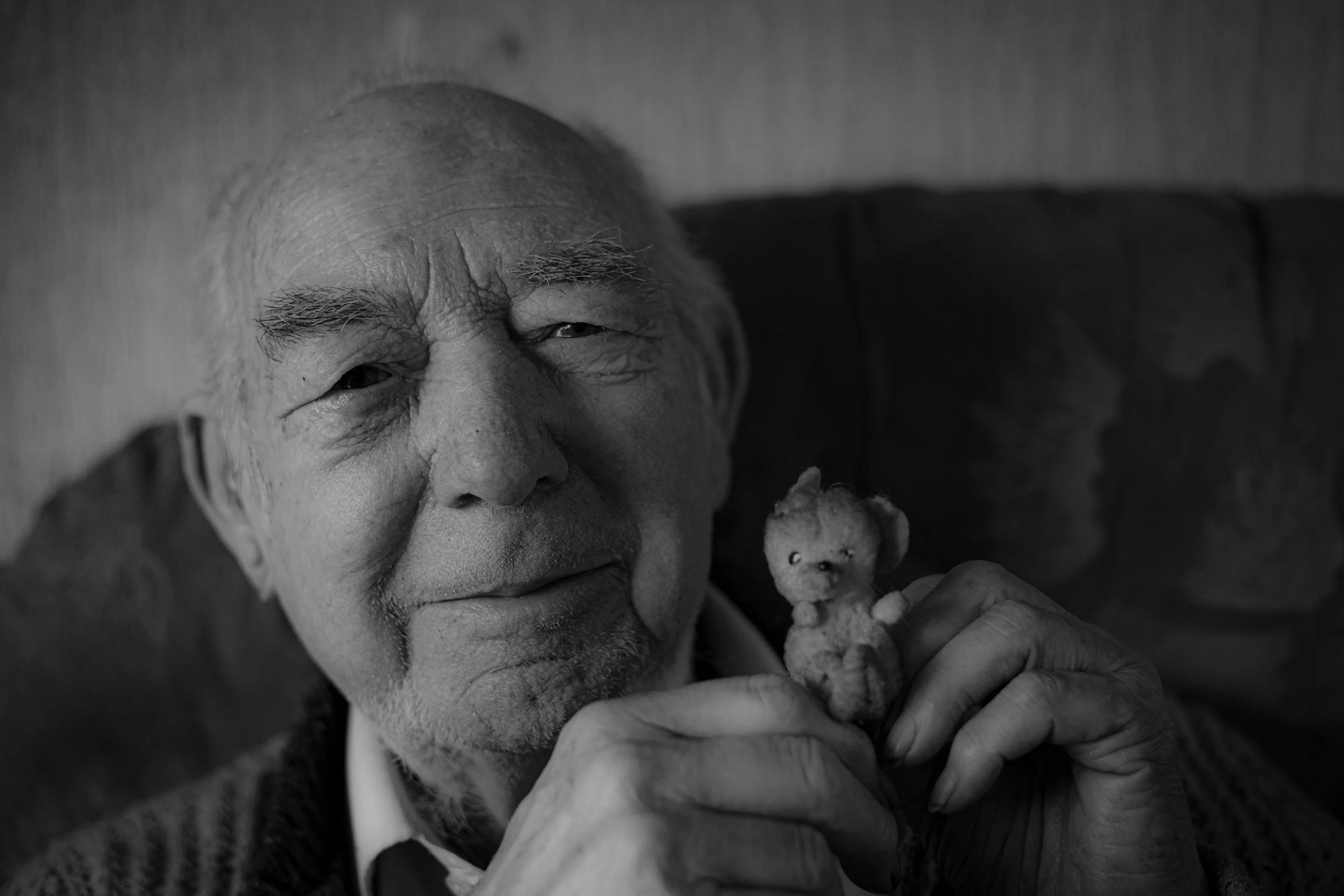
Little Henry
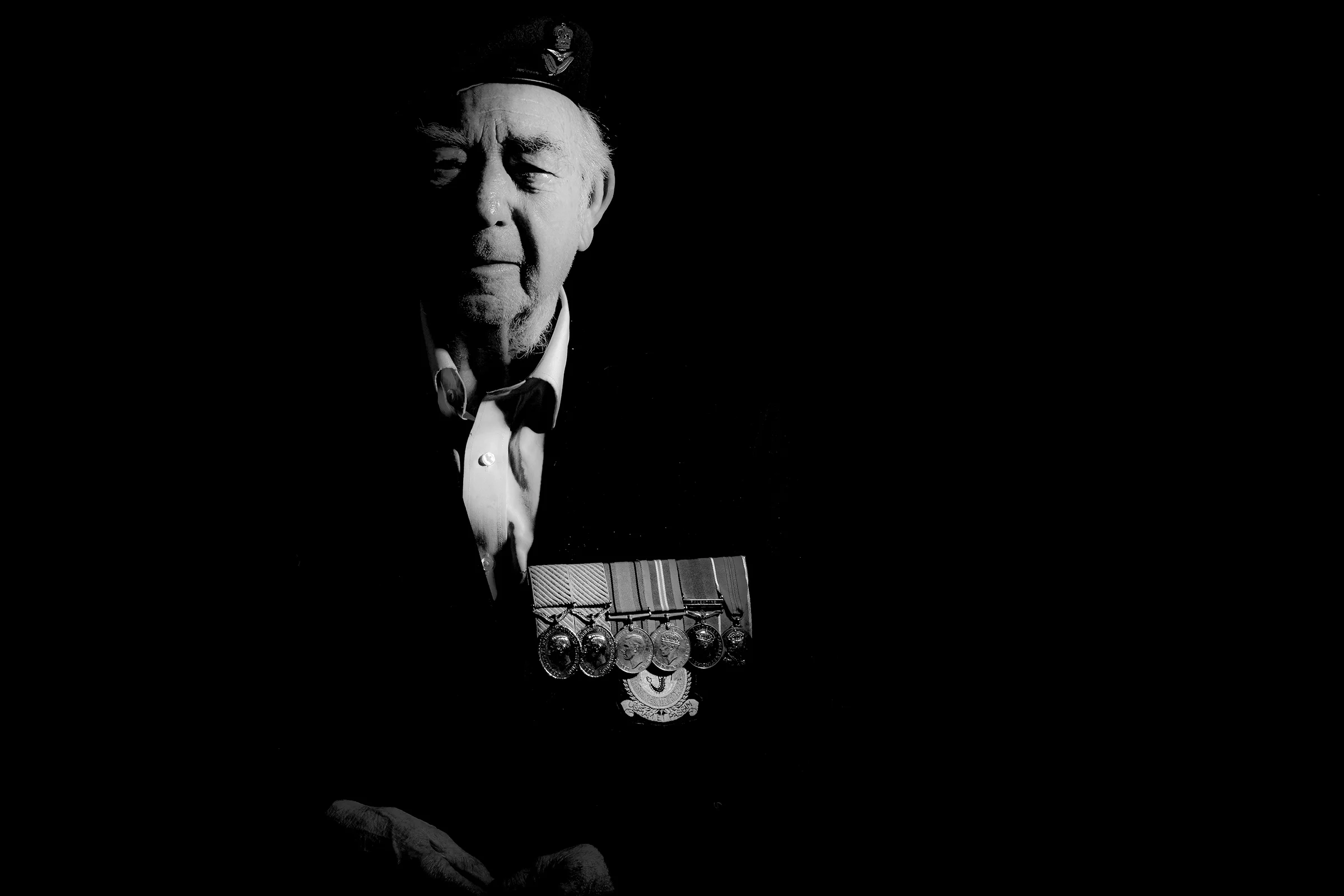
No matter where Sidney went, Little Henry was with him. Henry went to Palestine with Sidney and flew with 8 Squadron in Aden. I was lucky enough to meet Henry myself while spending time with Sidney; you would always find him sitting on the mantelpiece over the fire. Only recently I found out that dear Sidney passed away in 2019 in Brighton. He was cremated in his squadron jacket and his beret, with Little Henry in his chest pocket.
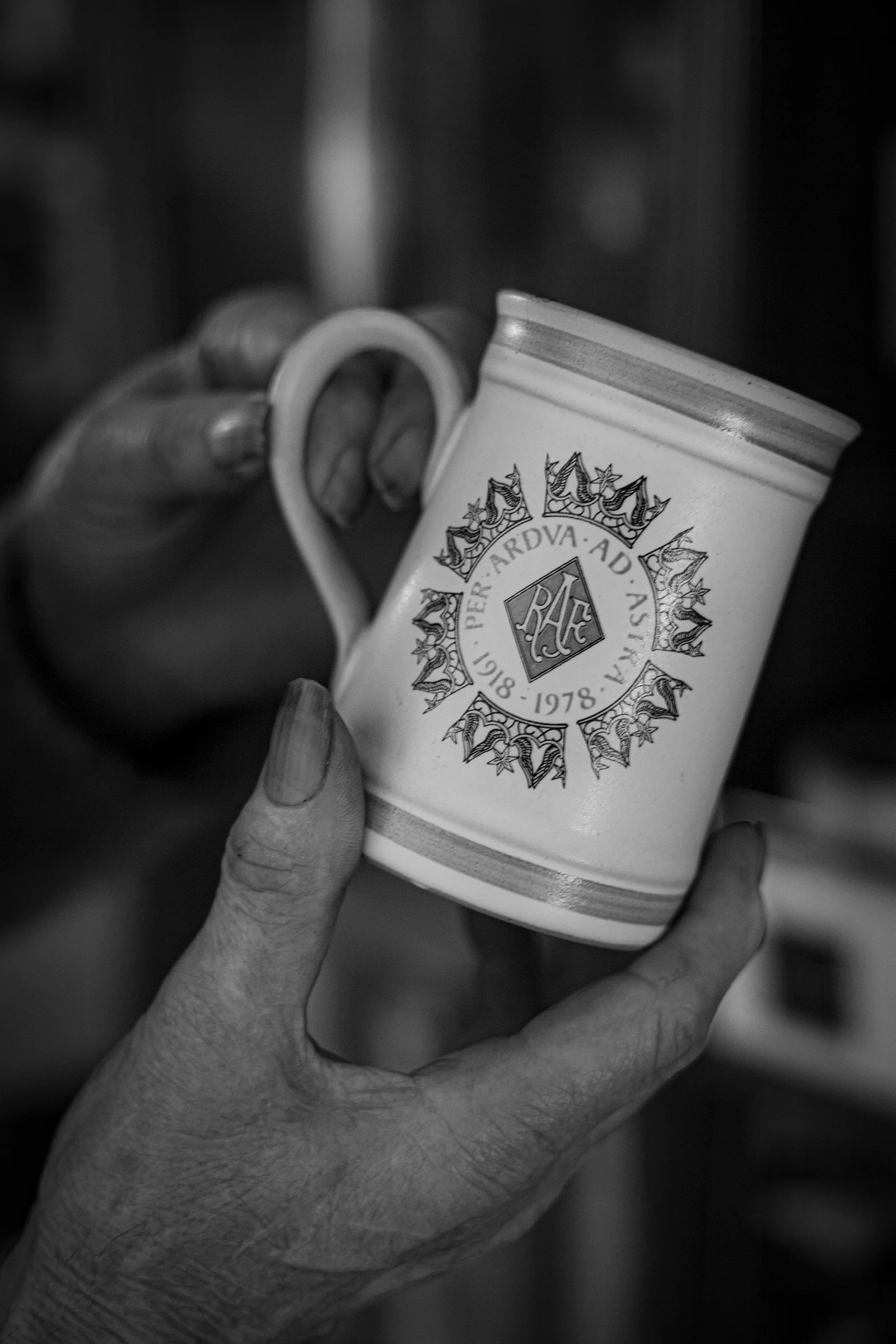
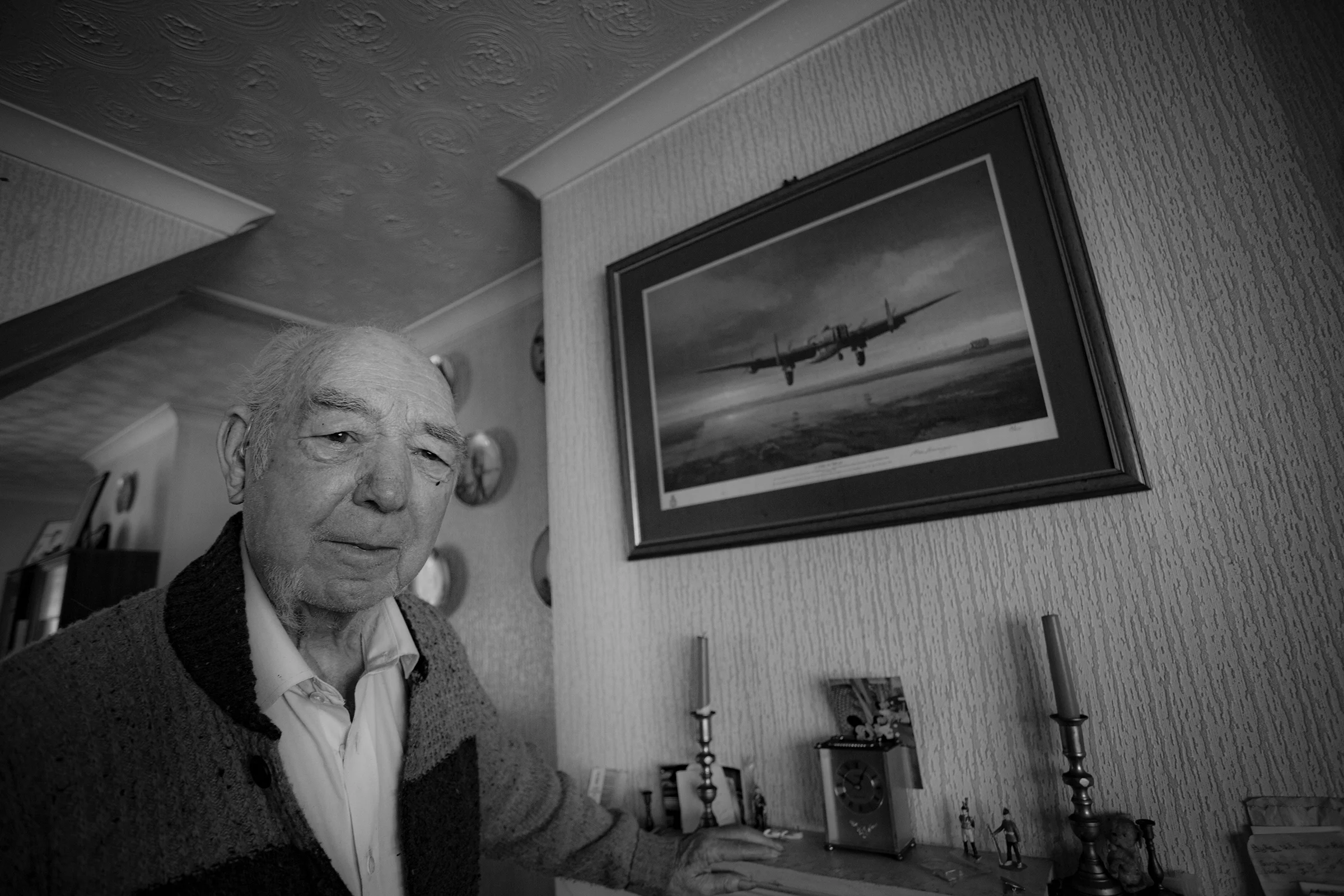
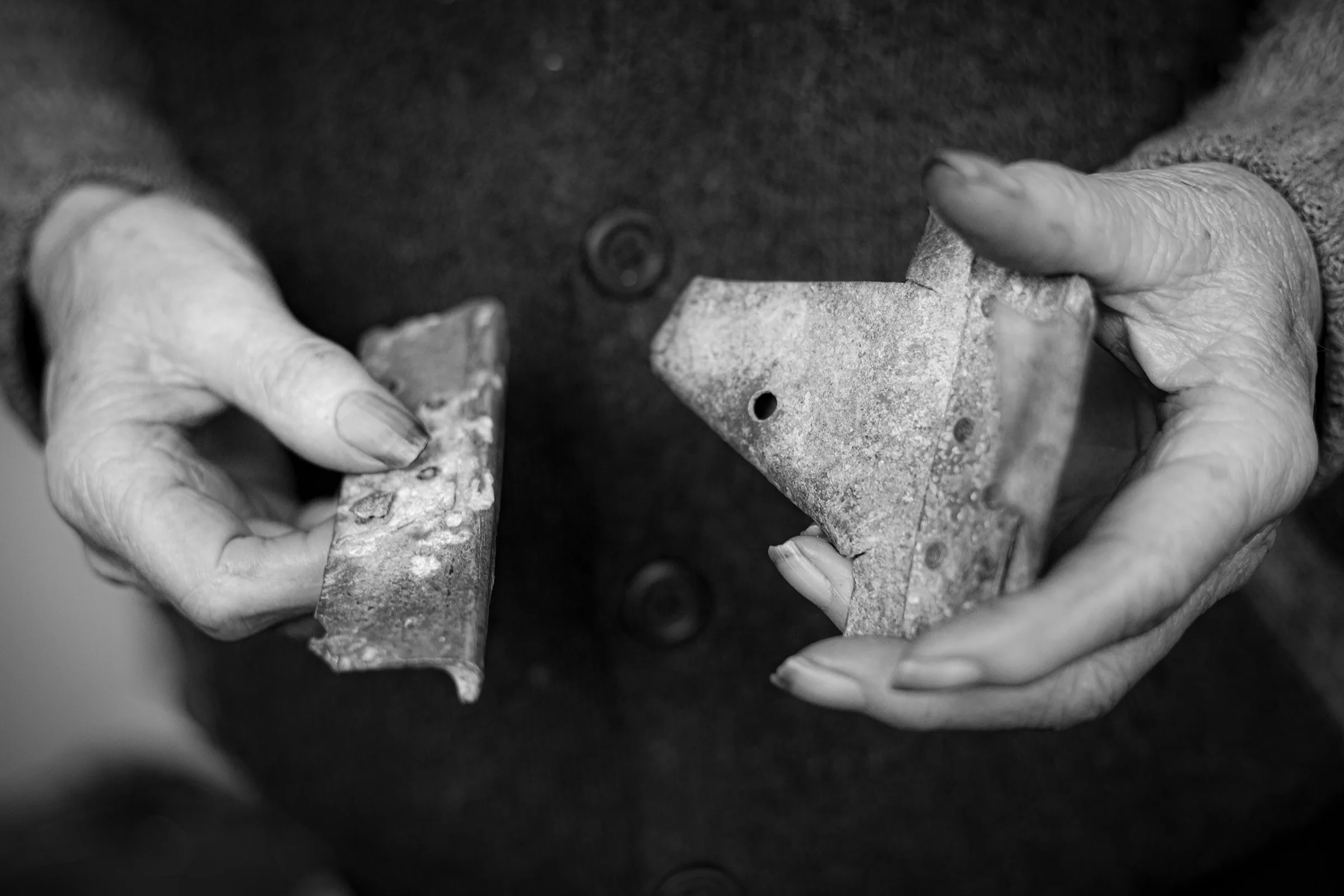
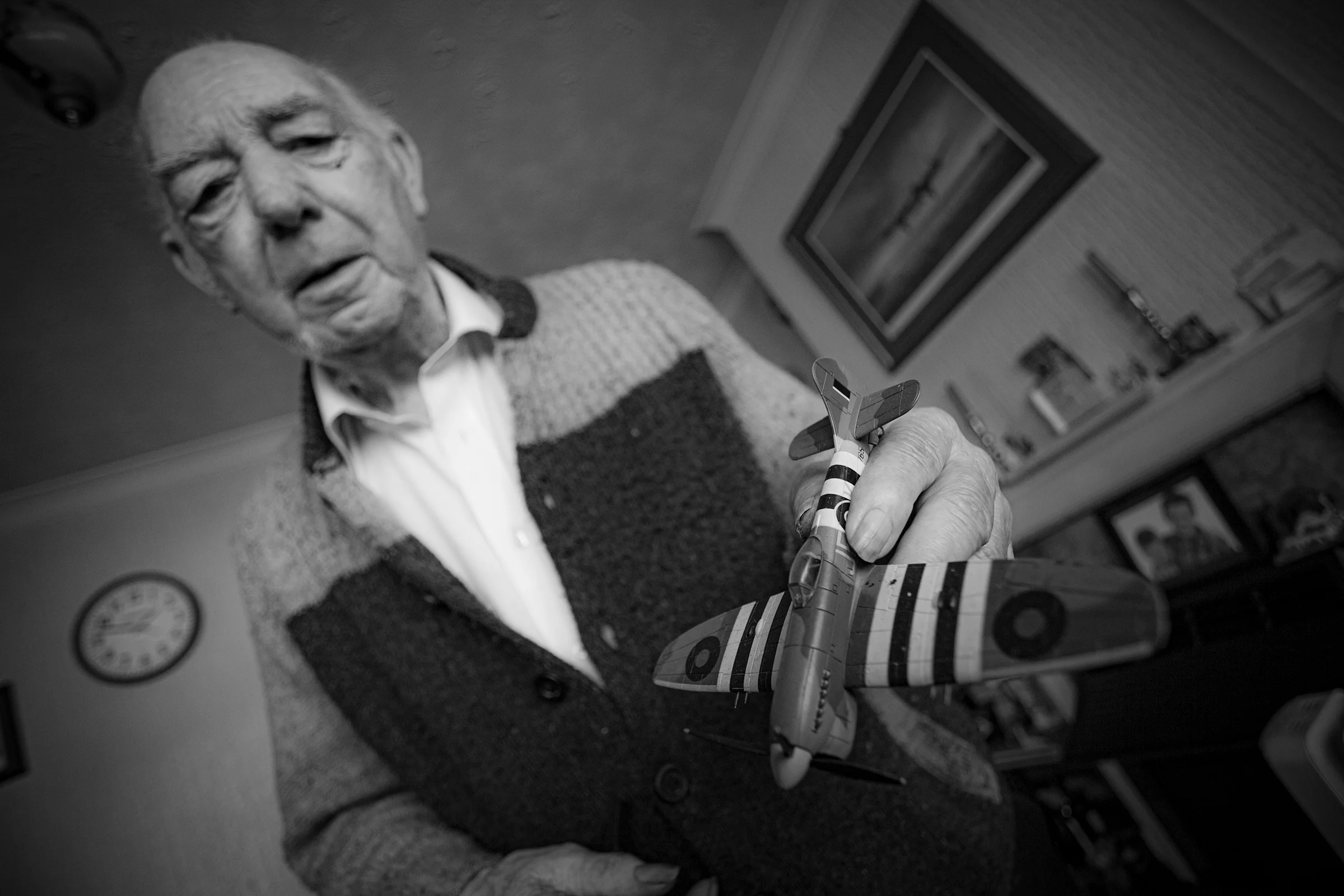
Ben May
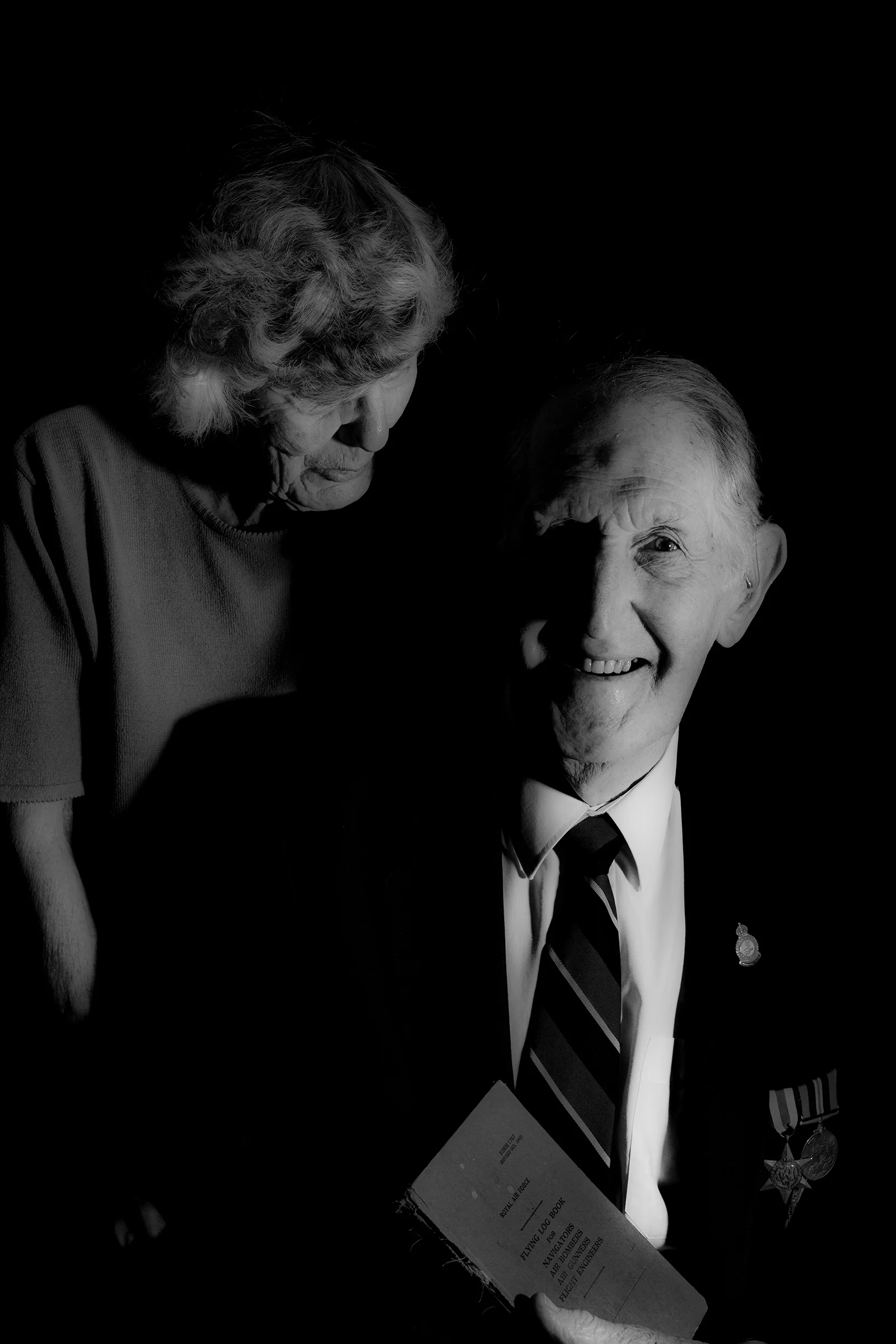
I felt very fortunate to have met both Fred and Sid, but I felt the need to find one more person, to learn more personal stories of WW2 from the air. Whilst running a small photography workshop at Walmer Castle for English Heritage, I got talking to one of the attendees about the project. She smiled warmly and told me about her uncle, a gent called Ben May, who was living in Canterbury at the time. Ben had served in the RAF towards the end of the war, and she kindly arranged for us all to meet at Ben's home. I am thankful to her for arranging the meeting with this remarkable man.
My wife Emma came with me, and it was a very pleasant day heading down the motorway to the beautiful city of Canterbury. We arrived at Ben's house, parked the car with all the camera and lighting equipment, and were warmly welcomed in by Ben's wife, who showed us into the living room. Ben came in a couple of minutes later with boxes and papers under his arms. "Hello Lewis, I'm Ben," he said. A very tall and extremely pleasant chap were my first thoughts and, as I was to find out, Ben had also been a professional photographer in his day, both during and after the war.
Ben was born in 1925 in a pleasant village called Crossroad, and then spent a long period of his life in Birchington, not too far from Manston in Kent. Ben said his life was pretty ordinary. He went to Peltman School near the seaside town of Margate, where he passed all his exams. After his schooling, at 17, he joined the aircrew allocation centre in Manston, and at the age of 18 he was summoned to Lord's Cricket Ground, which was one of the recruitment offices for the war.
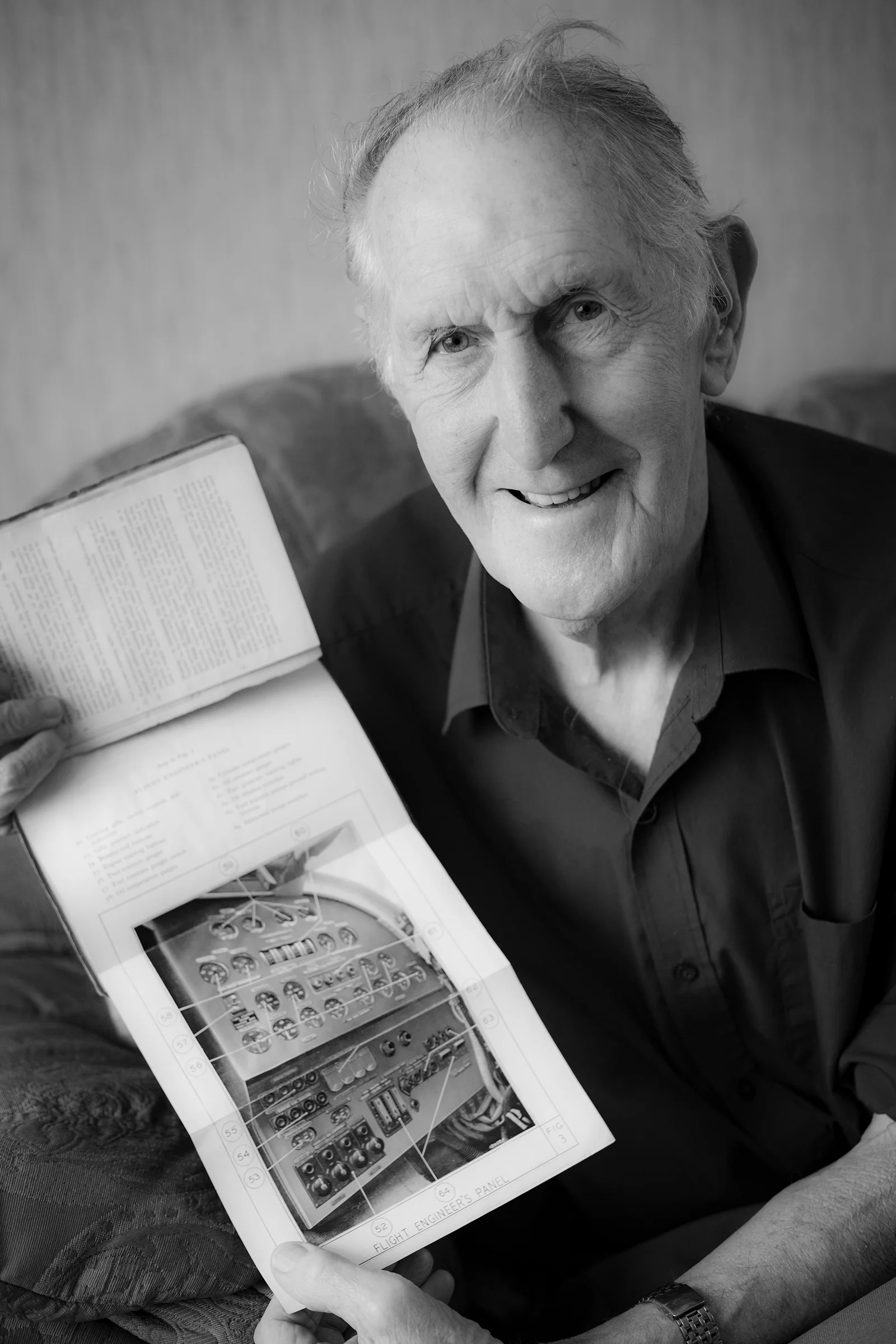
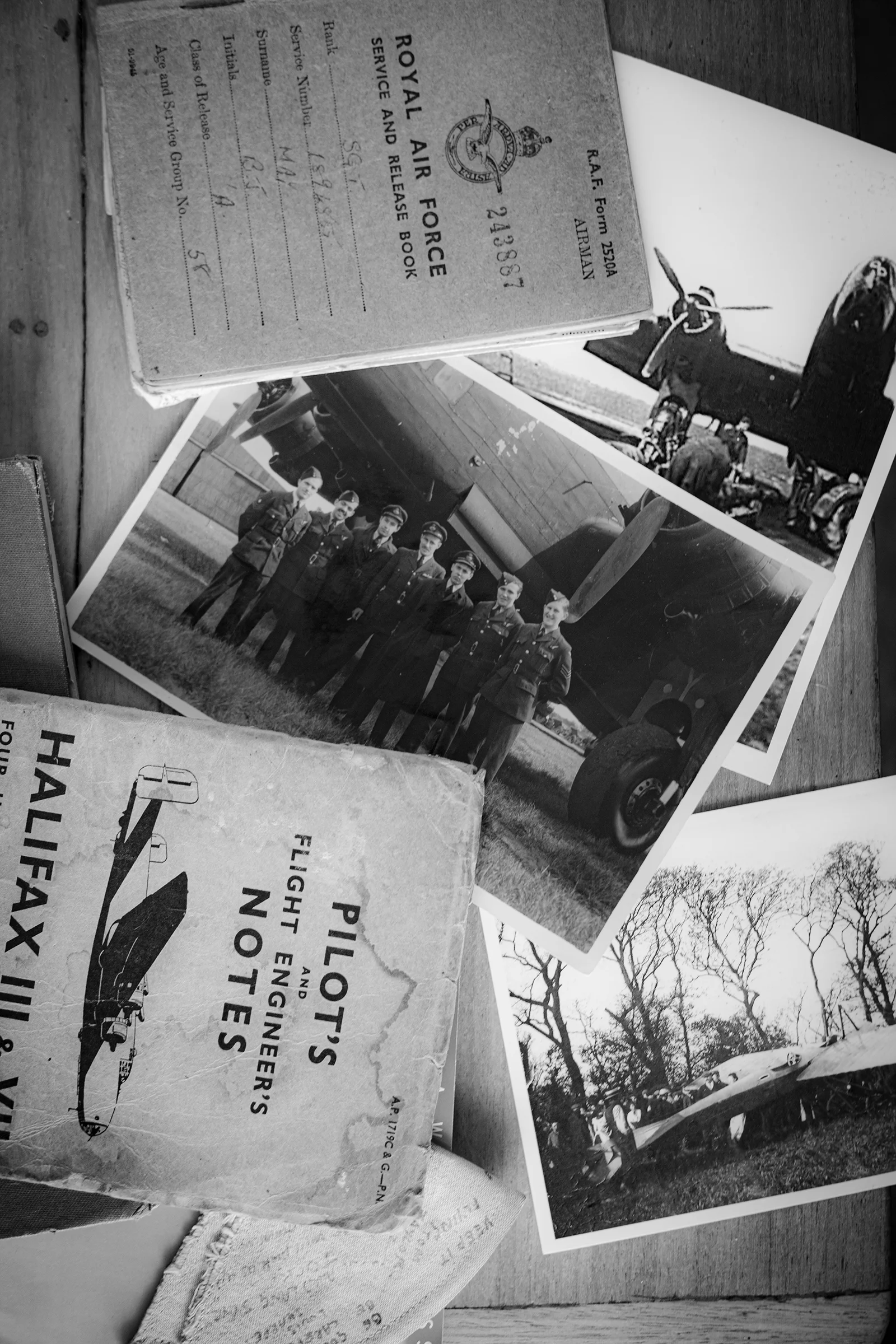
Ben was sent to Cornwall on a six-week course where he was trained in Morse code and signals, and after the course he joined the RAF as a flight engineer. Ben was posted to 420 Squadron RCAF, based in Yorkshire, where he flew a number of missions under Squadron Leader Johnny Johnson. "I was based on the Halifax aircraft. It was a busy job, as there were far more fuel tanks to deal with than on the Lancasters. I was constantly logging the fuel when we were in the air, to make sure we had enough to get home."
A place Ben did speak about was Holbeach in Lincolnshire, a place I knew well, having spent hours upon hours roaming the Wash. The Wash was a practice area for the bombers, a place where they could turn easily and drop markers; I am not so sure what the wading birds roosting below would have been thinking, though. "When we took off for a mission we would meet up in groups of thirty aircraft, then these groups would form up with others. There were hundreds of us in the air at once."
One story Ben recollected: "We were over Hamburg dropping 'windows' out of the chute, and we had a strong wind blowing into the chute and it got blocked. I hurriedly tried to unblock it, but then the windows ended up all over the aircraft. It was chaos. It caused all of our instruments to stop working correctly, and we were chucking them out of the plane anywhere we could, just to get them out. The bombs we were carrying were covered in these windows; they looked like Christmas bombs."
For those like me who had no idea what windows were, Ben explained that they were strips of aluminium covered in paper, pushed out through chutes so they fell from the aircraft to the ground. The windows reflected signals and jammed the radars below, which is why all the instruments jammed when they came back into the aircraft. Part of his role was also to peer through the bomb sight to make sure the bombs had left; when they were stuck, Ben had to release them himself. Like the other two gentlemen I had spoken to, Ben described Hamburg as just a huge fireball.
Another story was from a mission when he heard the most horrific screaming from the mid-upper gunner. "I thought he had been shot by a night fighter, but when I arrived I could see his electrically heated suit had fused, and his feet and socks were on fire."
The one thing that stuck out to me was when he said, "If you were not nervous when heading out, you were already dead, or lying. My heart was always racing and the nerves were always jangling."
After the War
Ben enjoyed flying the Halifax; in fact he just loved flying in general. "At the end of the war I was asked to fly a Halifax back to Birkenhead. This was the resting place for hundreds of these planes, where they were all dismantled for scrap. A little sad, I felt, for a machine that had done so much for us."
Once the war had finished, Ben returned to Rochester in Kent, where he became a full-time freelance photographer for over 50 years. He used a 5x4 Speed Graphic large format camera and a Mamiya medium format camera for wedding commissions, and even photographed people sunbathing on Margate beach. I think Ben's highlight was being asked to photograph Concorde's first ever take-off with passengers. "I was really nervous. We never had digital in those days, but once I got the negatives back and they had been exposed correctly, I breathed a big sigh of relief."
My Notes
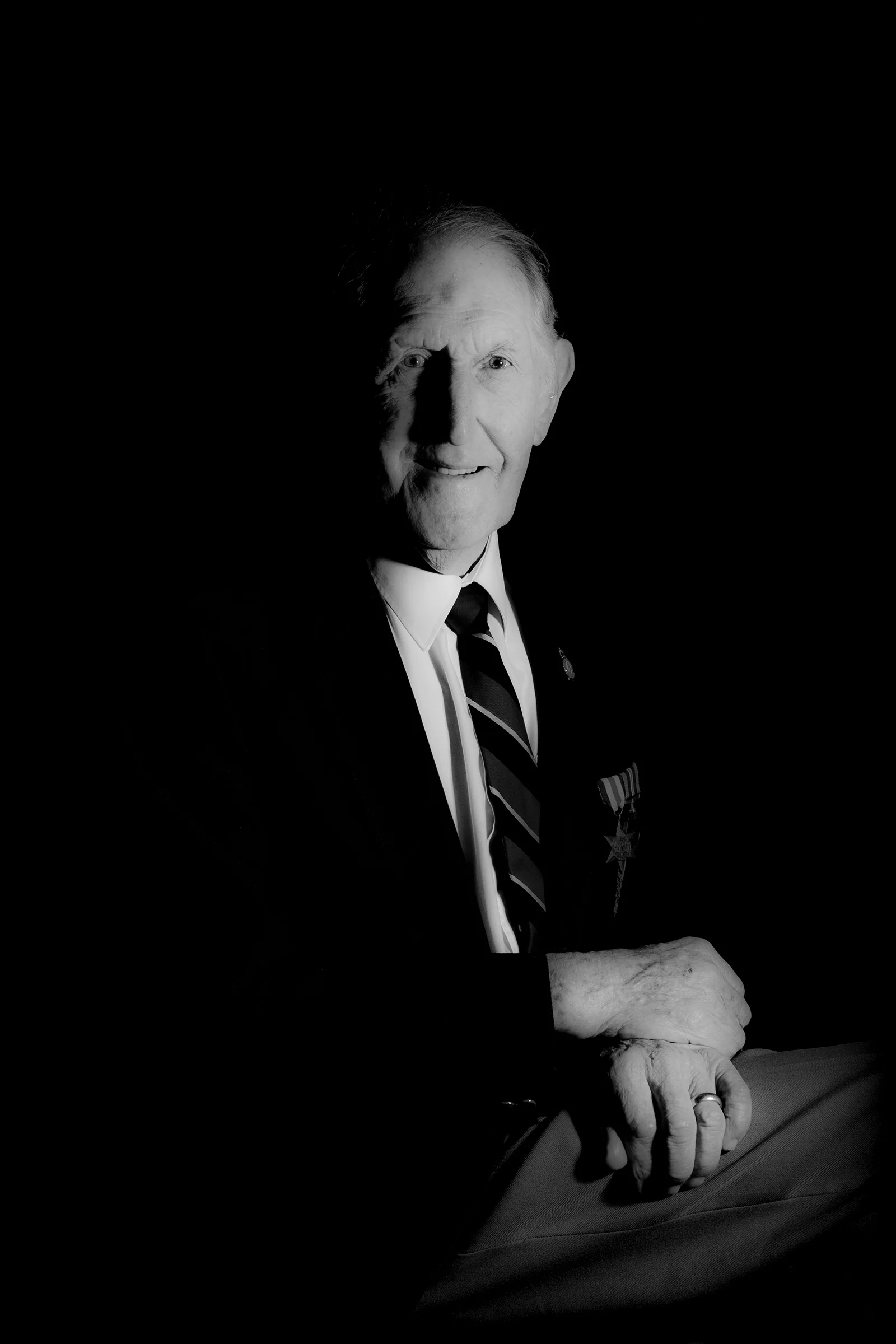
Unlike Fred Crawley and Sid Beaver, whom I met and spent time with many times, I only spent the one occasion with Ben May, but just like the others, the passion, courage and pain were clear to see. Ben and his wife were delightful people, enjoying the comfort of Canterbury and, like the other two gents who had served, no one would ever have imagined what Ben had been through if they had seen him walking down the street or met him briefly. Ben May was a lovely gent, and I am truly grateful to have spent time with him.

Outside of the Interviews
This was a life-changing journey for me personally. All three men had given me such a personal experience of their lives, and it was hard to imagine having to deal with so much trauma. I really felt the need to look more into the locations where they had been based, to have a good look at the Lancaster and the Halifax, and even to visit one of the RAF museums with one of the men, where something happened that was unbelievable.
Living in the East Midlands previously, I had been lucky enough to meet a dear friend called Kevin Widdowson. I don't know how, over the years, I have managed to meet such incredible people, and I have to say this has been one of the greatest parts of my life: meeting people who are not just friends but people I look on as family today. People who do the most incredible jobs, but also people who push the boundaries of normal Western life. Where do I start with Kevin? Captain of Global Marine Systems ships, sailor of the Cable and Wireless Adventurer, a ship that sailed around the world in record time, a pilot and owner of his own Grob aircraft, and somebody who is just truly passionate about life. The Widdowsons are family; I love them all. I had told Kevin what I had been doing, as I knew he would be really interested. Only a couple of years before, Kevin had asked me to fly in to the small runway where the renowned Lancaster Just Jane was based, and this would be a venue we would return to document.
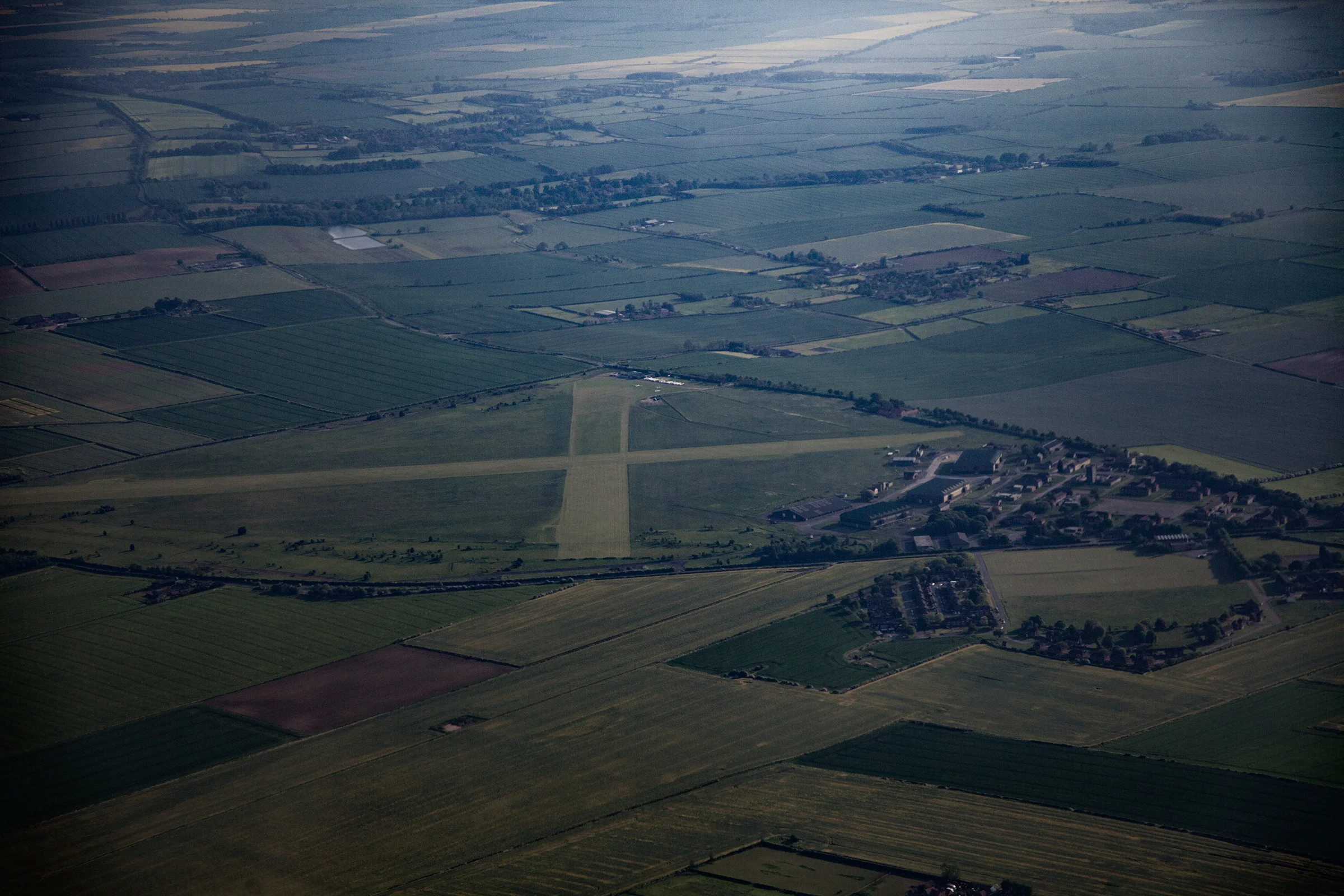
Kevin kindly offered to help by flying me in his own aircraft over many of the disused runways that existed during WW2. Many of the runways were now crop fields, though still very obvious from their crop patterns of rapeseed and sugar beet, and seeing them from the air gave me a real perspective on how many there were during the period. I would also use the opportunity of flying in to different airfields, such as the Lincolnshire Aviation Heritage Centre and RAF Elvington in Yorkshire, where the archives were kept. On the ground I wanted to document the disused buildings that would have been bustling during the war, and their distinctive looks from that period. I had a mountain of images from the Wash, which was a key area for practice flights in readiness for the real missions over Europe.
RAF Bases
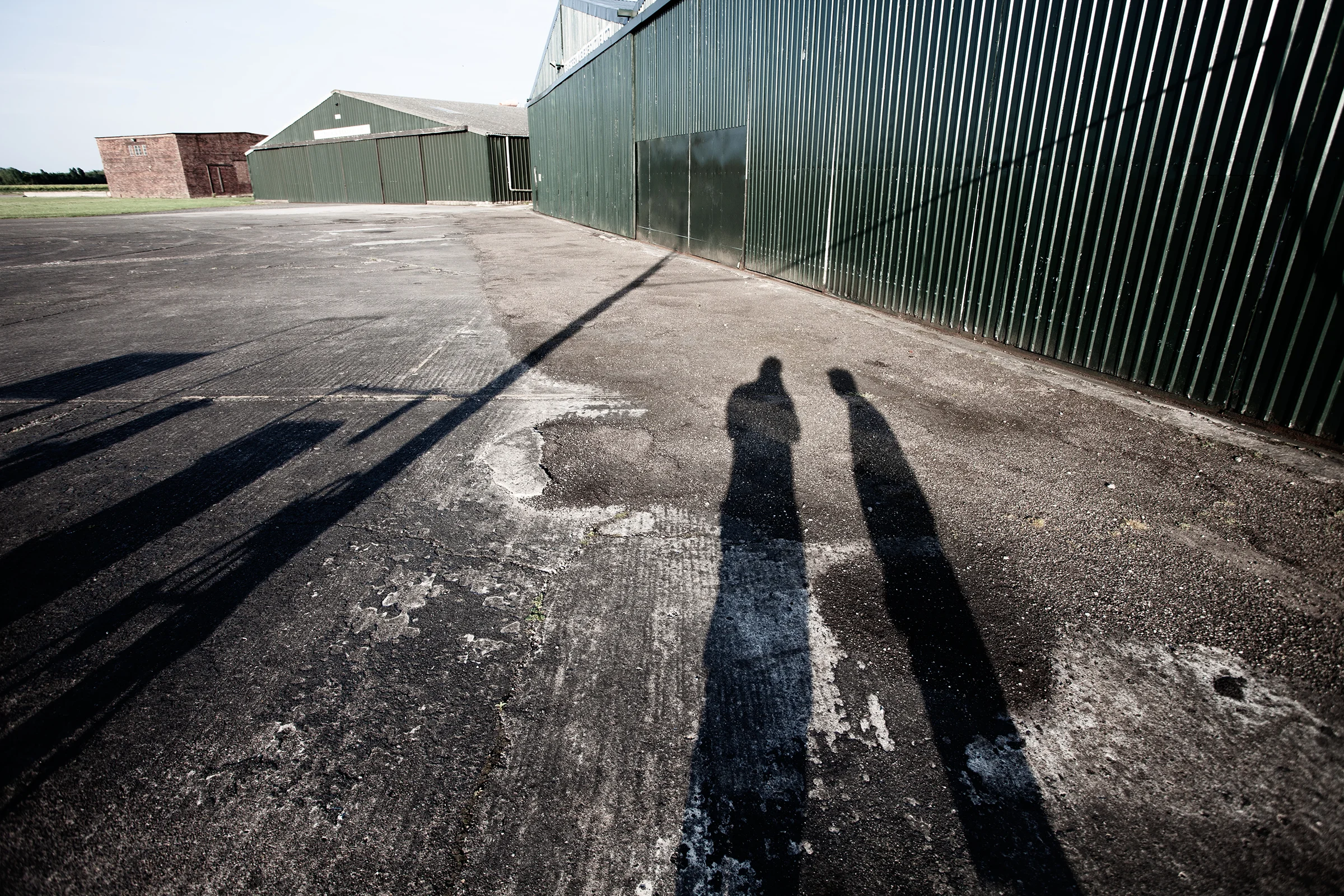
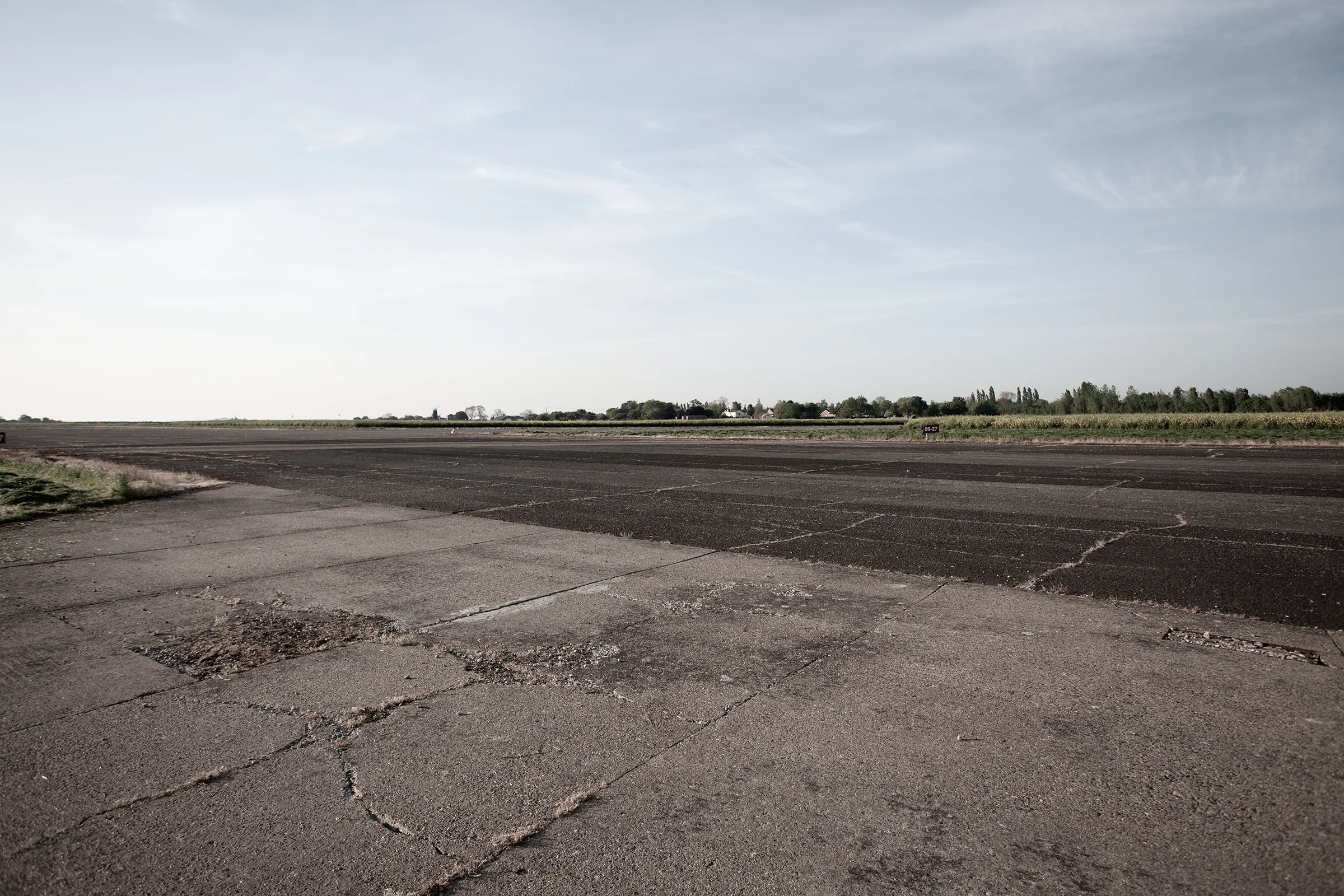
Kevin was based in South Yorkshire, so I travelled up from Kent on a number of occasions to document the project from the air. RAF Sandtoft, where Kev's plane was based, was also one of the bases the Lancasters would leave from during WW2, and when you looked closer at the ground you could easily see the remains of an airfield that had been in daily use. It was hard to think how this quiet rural airfield could have been home to possibly hundreds of aircraft and many men. As you walked around the runways you could find the D-rings fixed to the ground, used to secure the planes when they were static. There would have been far more hangars, and again you could find, etched into the concrete, the sliding door grooves of hangars that had been dismantled. This was once a very busy place, a place where airmen such as Fred, Sid and Ben would have lived and flown missions over Europe from.
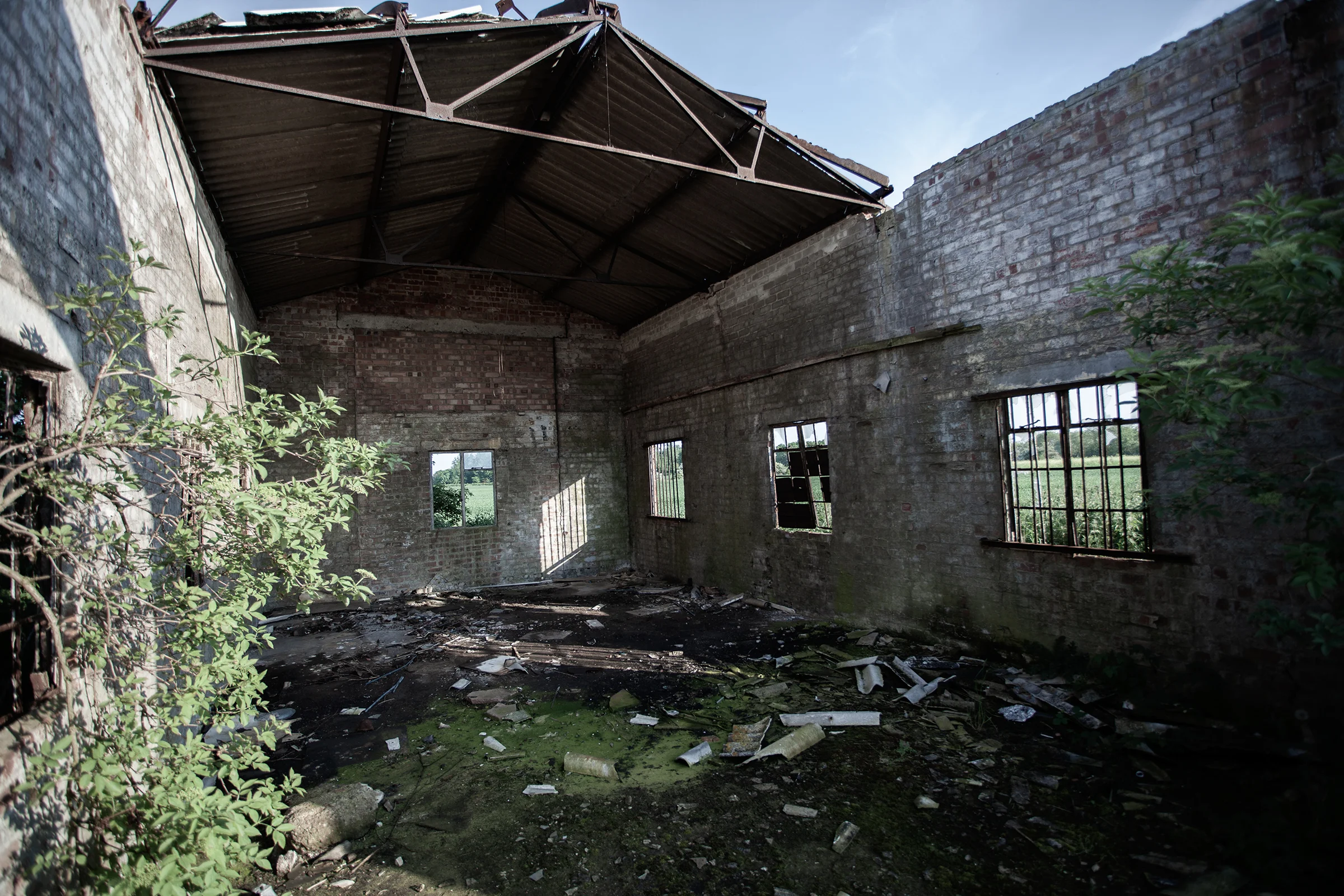
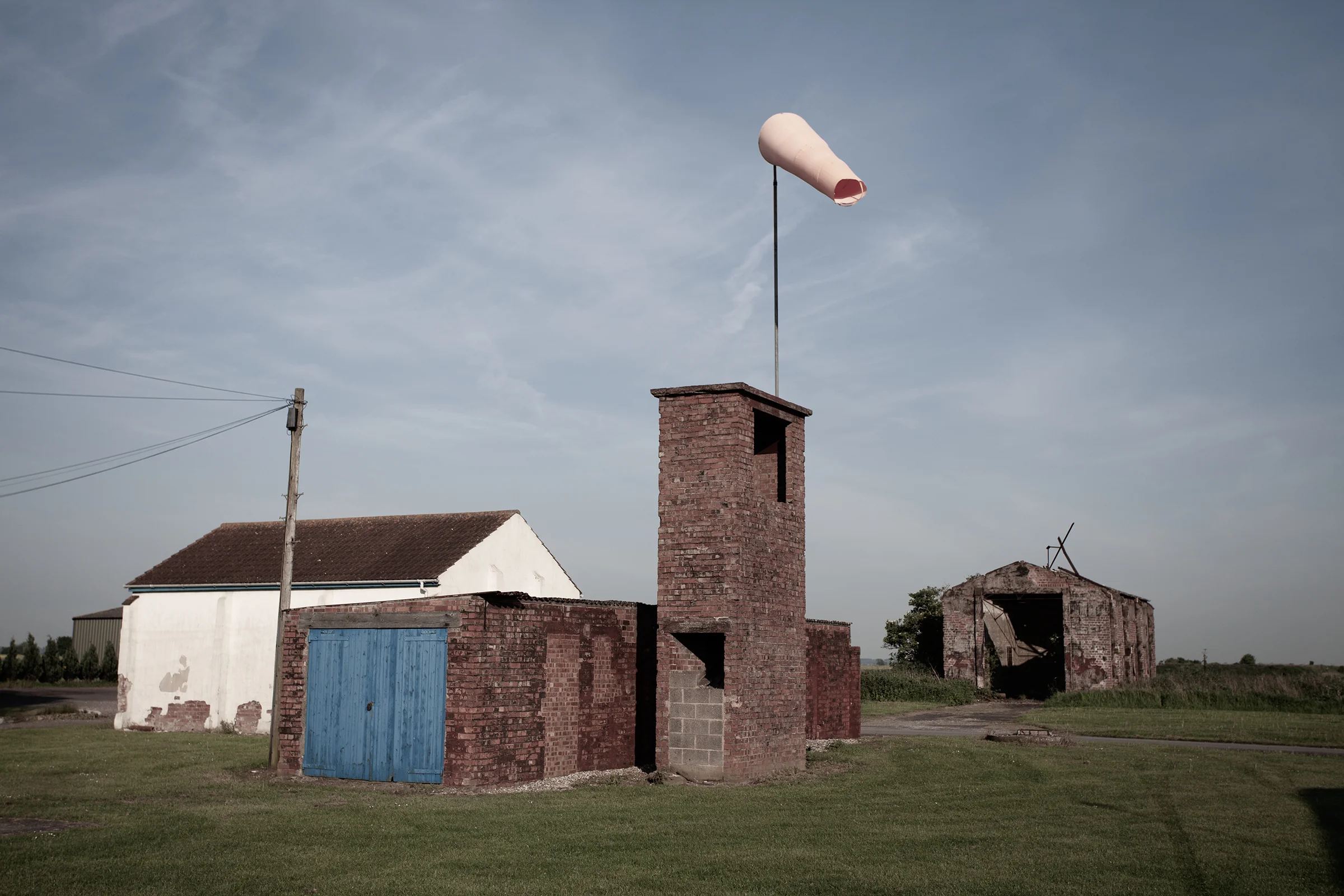
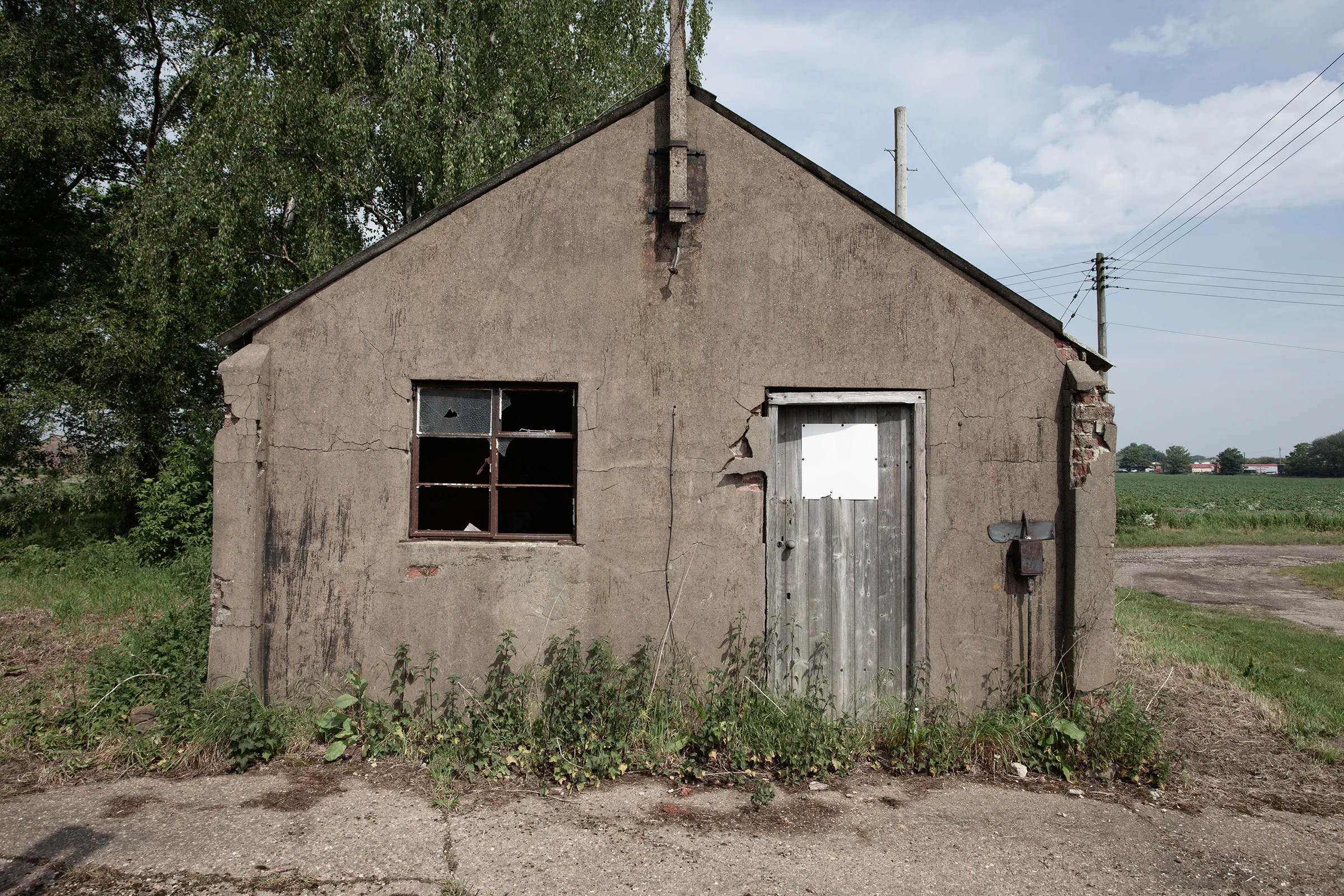
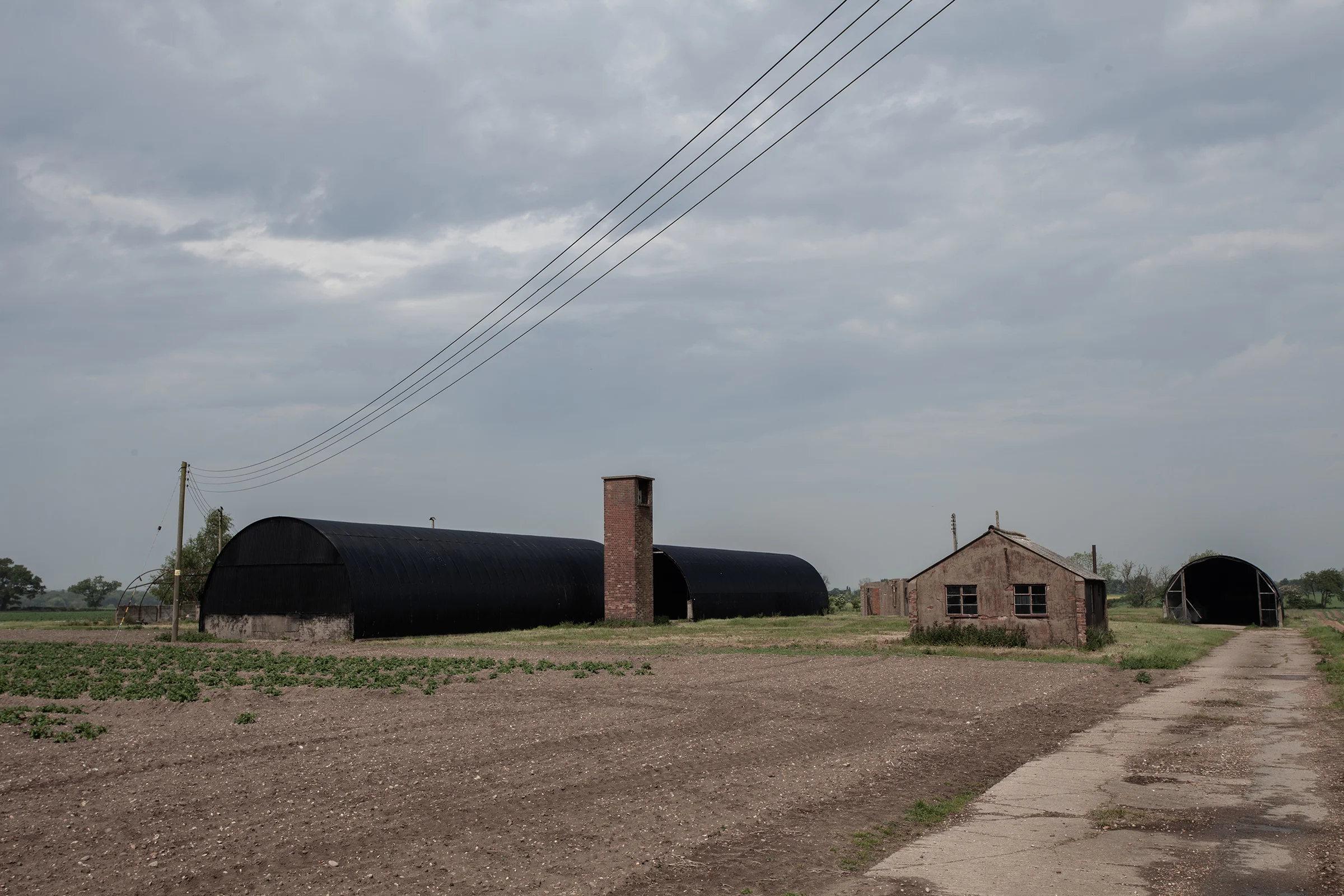
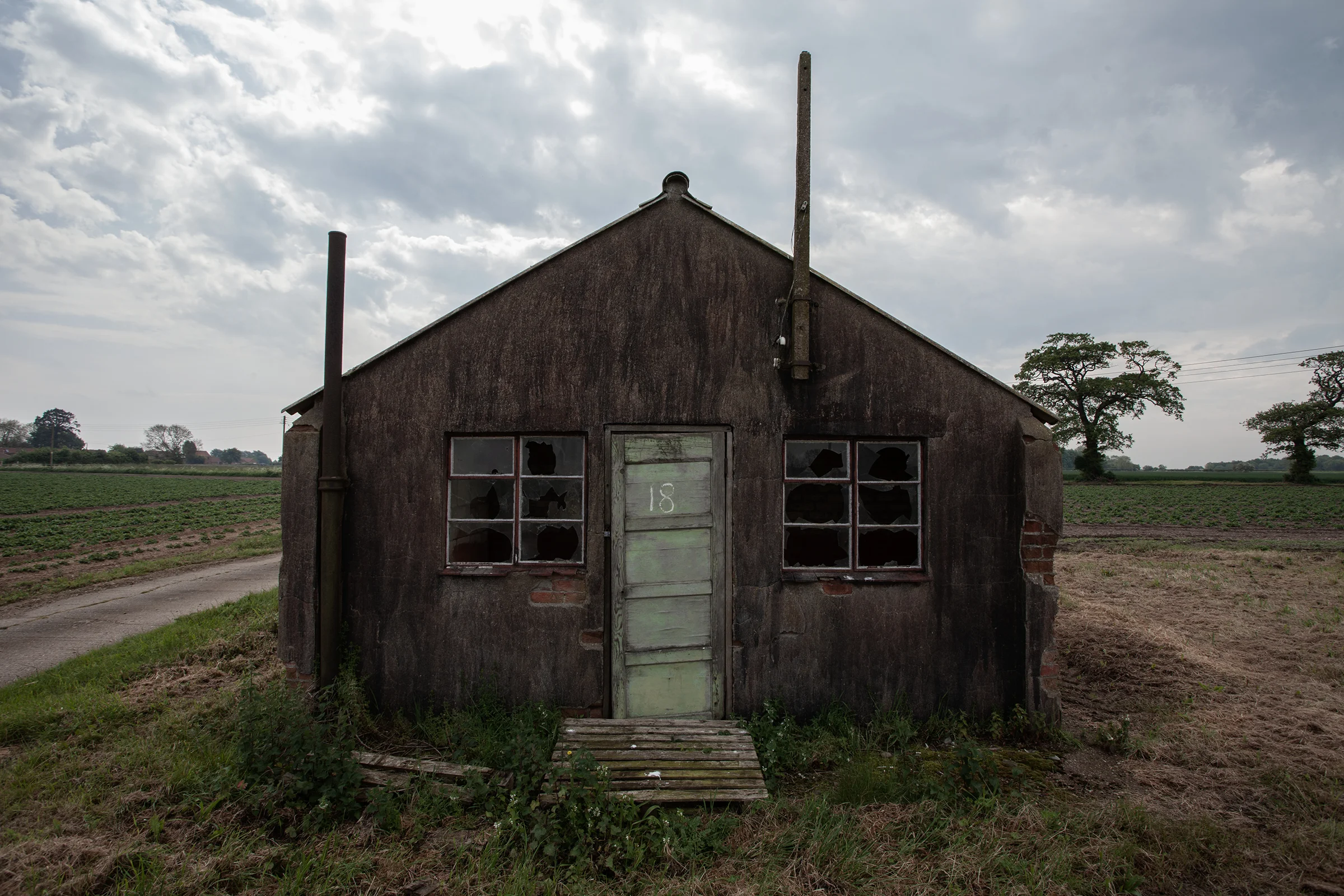
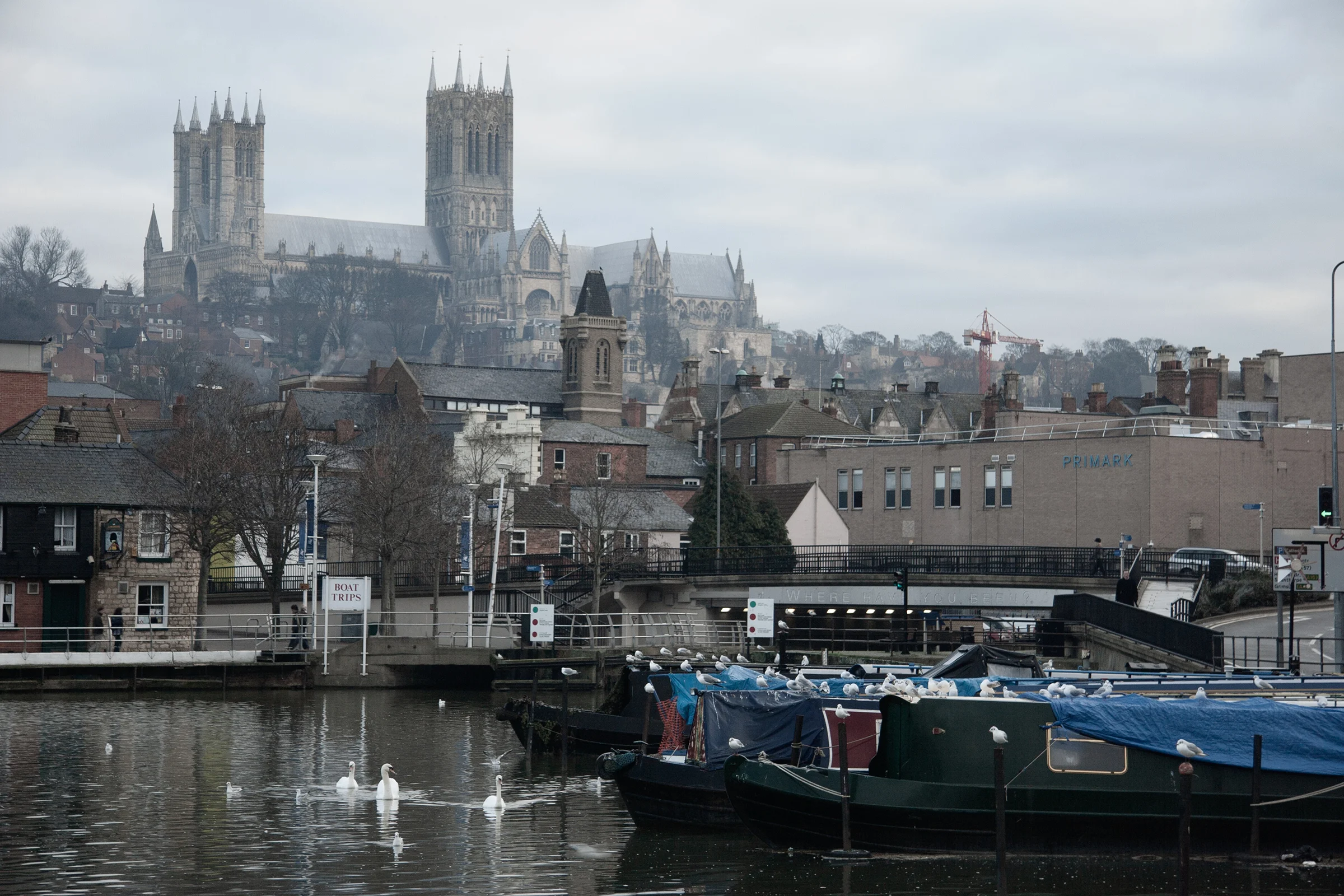
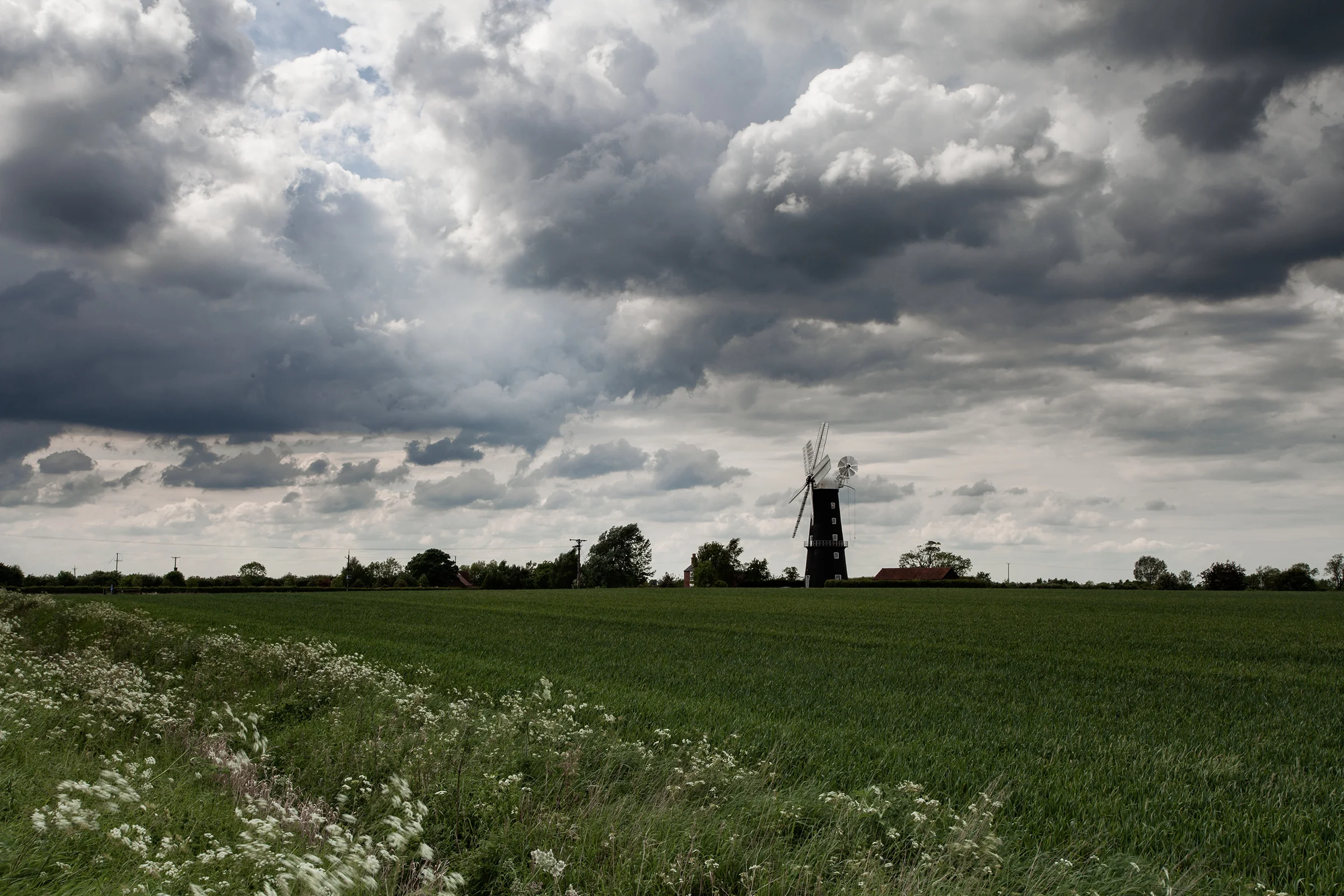
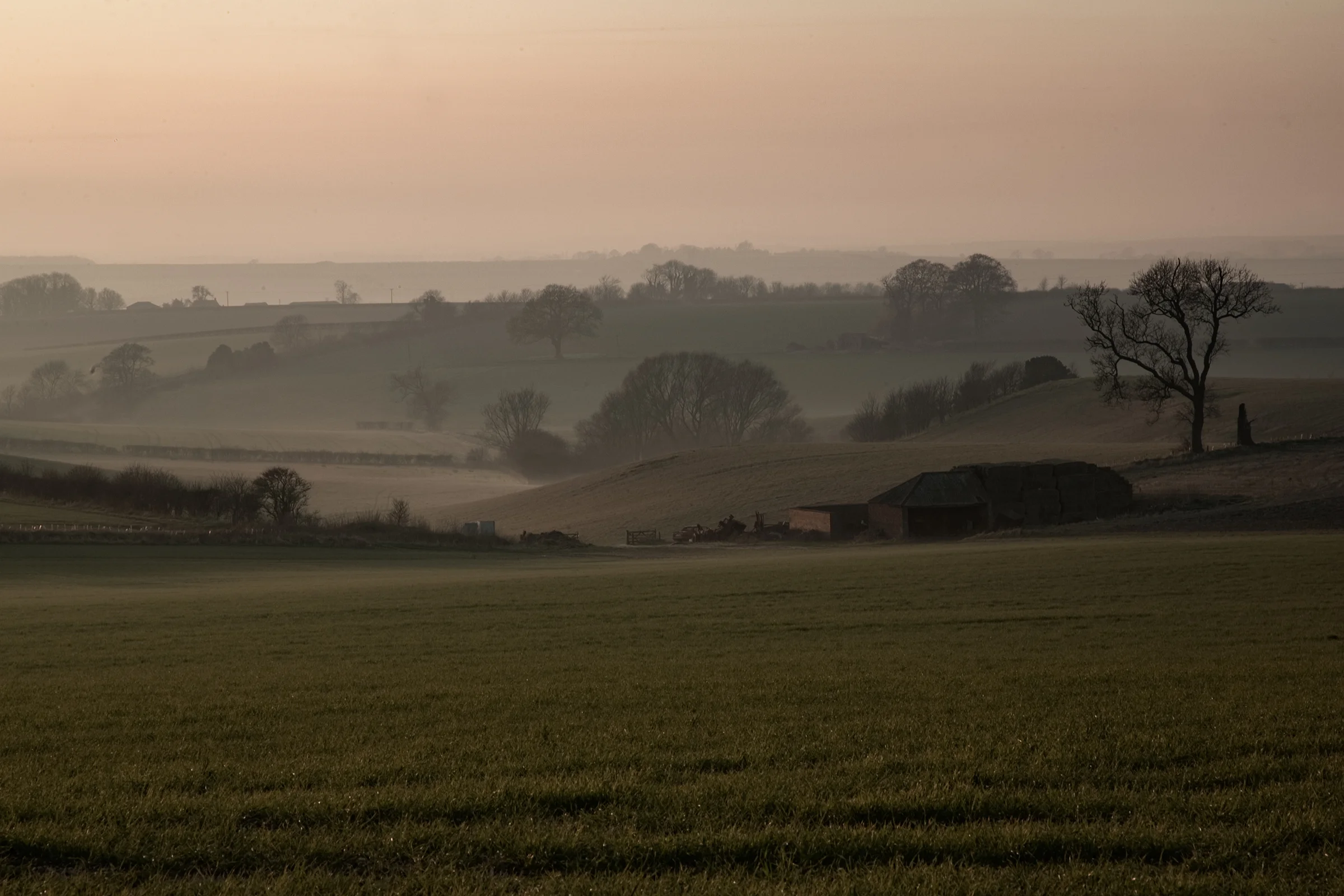
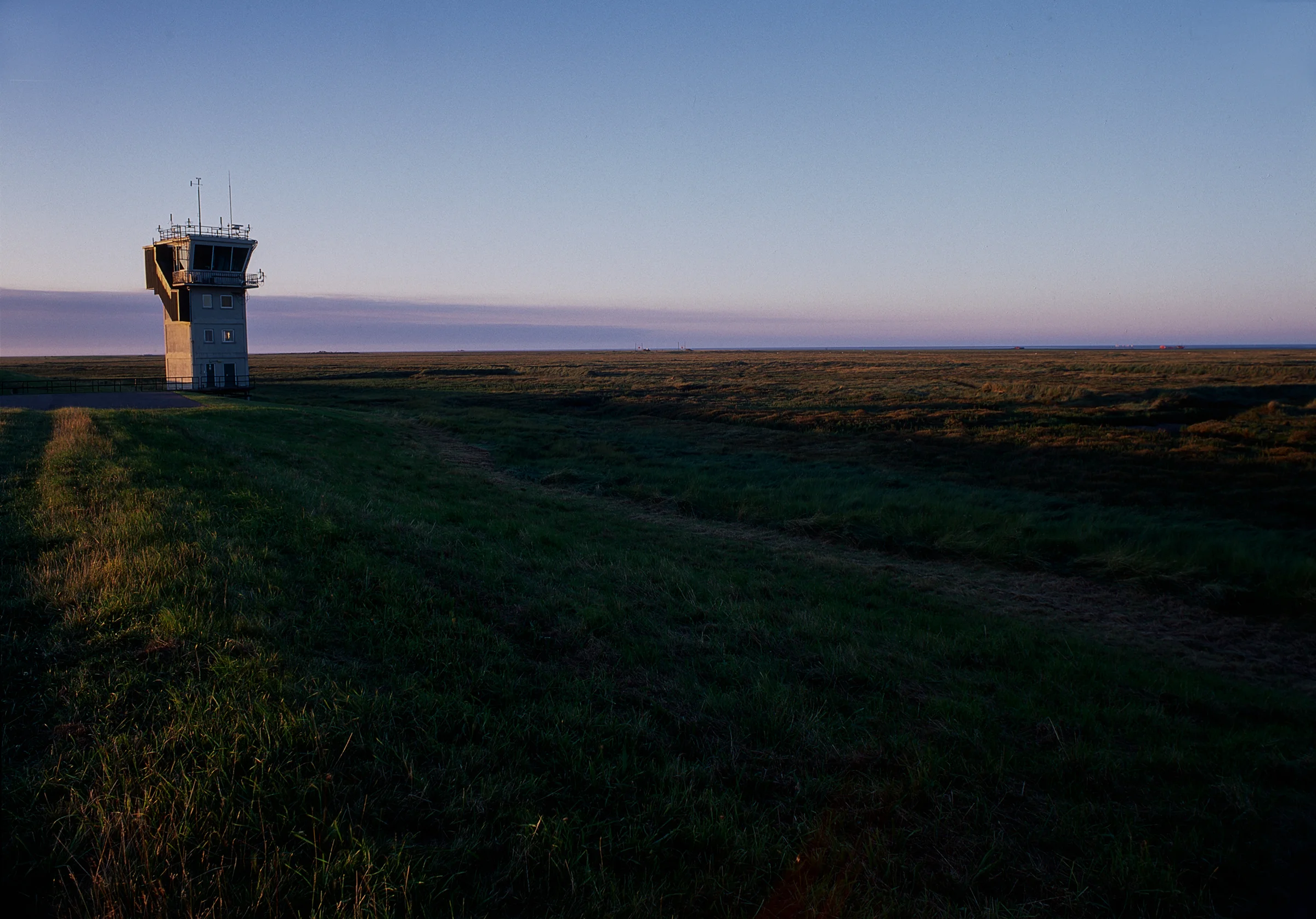
The other noticeable thing when driving through Lincolnshire and Yorkshire was the number of abandoned buildings that were once used during the war. Their architecture and shapes were similar, often dotted about in fields on the horizon. This part of the eastern seaboard of Britain was a vital cog in the success of the war, and its disused remnants are now a quiet reminder of what was happening during this period. Today it is a flat landscape used to grow crops, a region renowned more for its flower growers than for housing many thousands of large bombing aircraft. From the air there are also some very noticeable beacons that would have guided the pilots once back over British soil: the Boston Stump, at 83 metres in height, and further to the west Lincoln Cathedral, both markers that pilots used when returning.
Just Jane
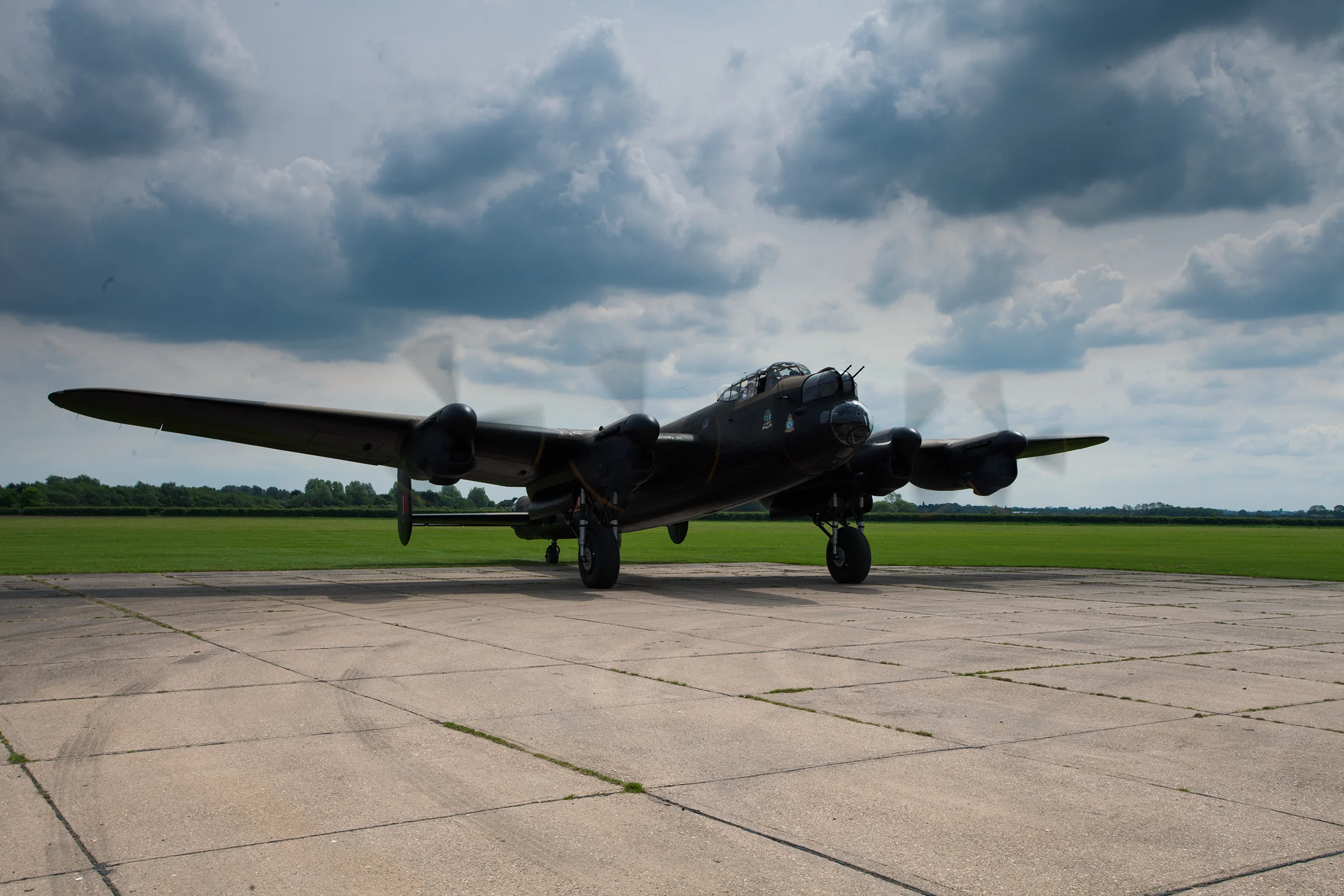
I had been in touch with the Lincolnshire Aviation Heritage Centre near East Kirkby about visiting to document one of only two Lancaster aircraft where you can still hear the magnificent Merlin engines fire up. The Centre is a privately owned and run museum, set up by two farming brothers, Fred and Harold Panton. It was built as a memorial to Bomber Command, and primarily as a tribute to their eldest brother, Christopher Whitton Panton, who was shot down and killed on a bombing raid over Nuremberg on 30/31 March 1944.
For a short time after the war the brothers wanted to visit Christopher's grave in Germany, but their father denied them the chance, as he wanted 'nothing more to do with the war'. Then, in the 1970s, Mr Panton called Fred over and told him to 'get off to Germany and bring me a photograph of Chrisy's grave', which of course Fred did as soon as he could. This reignited Fred's interest in the war, and when Avro Lancaster NX611 came up for sale it was eventually bought by the brothers and brought to their land at East Kirkby. Even though they had planned to keep it for their private collection, it was suggested that they make it into an exhibit for the public, and the museum was set up with the Lancaster and the control tower as its centrepieces.
After I explained my work, they kindly invited Kevin and me to fly in to the airfield during an engine fire-up and taxi demonstration. Just writing this has set off the butterflies in my stomach, from the excitement and anticipation of hearing those engines in harmony together. I was given access to the runway and asked to stand 100ft away from the aircraft, while the rest of the viewers were at least a quarter of a mile away so they could see the plane taxi up and down the runway. I was smiling like a Cheshire cat. The engines fired up one at a time; the noise was incredible and I could feel the vibration through my body. I was trying to imagine, from the stories told by the three men, what the noise from hundreds of these aircraft would sound like. It was one of those moments in life I will never forget. I had been very fortunate to experience this at such close quarters, and more importantly not during a time of war.
RAF Elvington
Elvington was a location I really needed to visit. RAF archives were held there, and some of the information I had gathered from Fred Crawley needed to be raised, as the record on this issue was wrong. It is also home to the Yorkshire Air Museum, which houses one of the Halifax aircraft and an original bouncing bomb used by the renowned Dambusters. Elvington was originally a grass airfield but was rebuilt in the 1940s with a tarmac runway 1.9 miles long, the longest the RAF had in the north of England.
I was flying with Kevin from Sandtoft, but the winds that day were a little awkward. Kevin would always remark that it took much longer for the plane to stop when landing due to my size. It was a good job the runway was so long: the crosswinds were strong, and as we touched down we must have bounced at least a mile down the runway, all down to me being overweight, allegedly. We both headed into the café for a drink while I got the paperwork ready to take into the archives, so I could give them the information Fred had relayed to me. The issue was incorrect information about one of Fred's colleagues during the war; later in life Fred found out that what was known about the man was wrong, so we used this opportunity to correct the facts.
Once done in the archives, I ventured into the hangar to view the Halifax. Like the Lancaster she was grand to look at. Named Friday the 13th, she took up a huge space in the hangar, dwarfing the other aircraft around her. I started imagining the story Ben May told me about looking through the bomb window to see if their payload had left the aircraft. The Halifax was in wonderful condition, and I was pleased to think she never made that last journey to Birkenhead, where so many others ended their flying careers.
The Wash
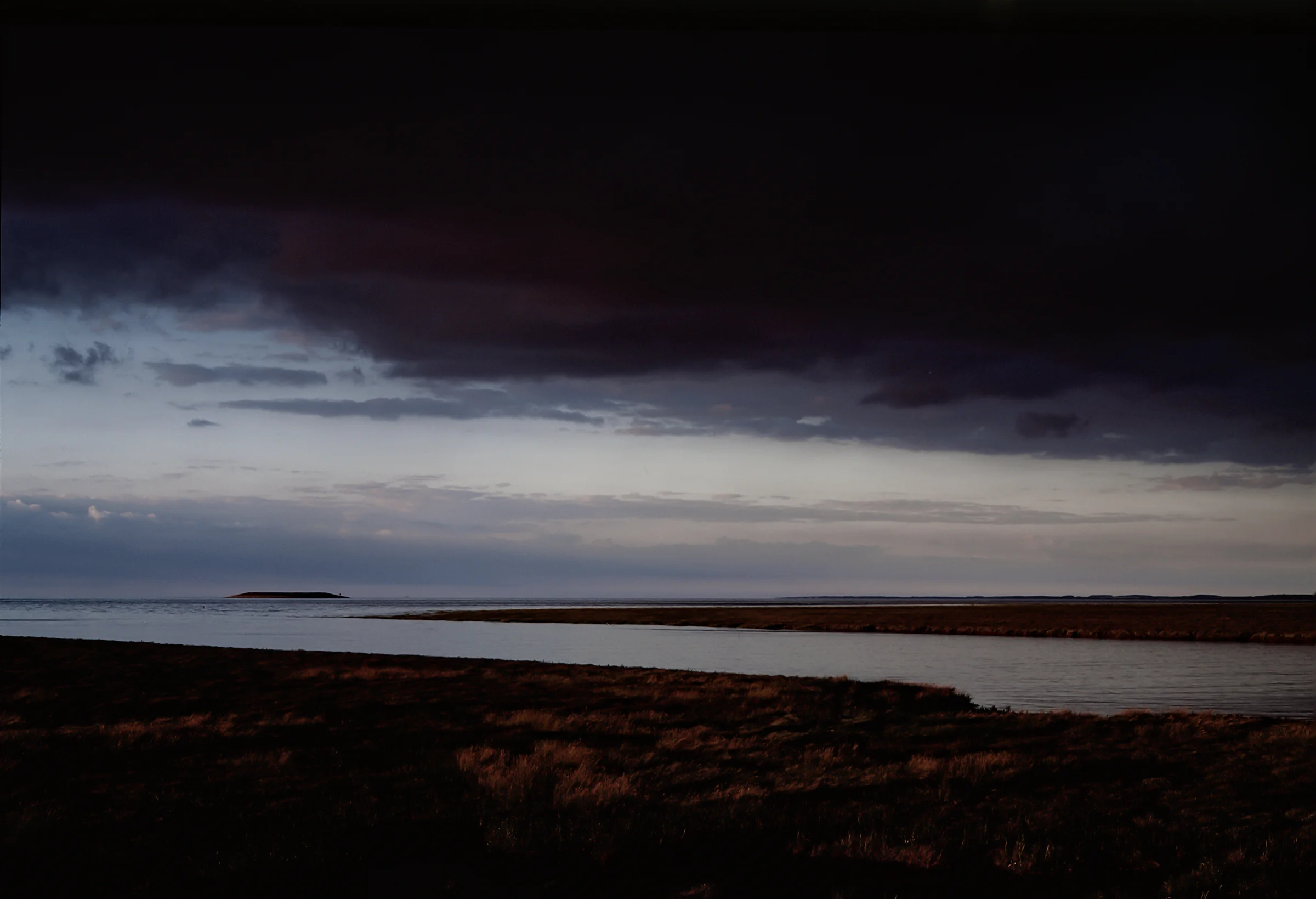
The Wash is a very special place to me personally. It is where I became a photographer and somebody truly passionate about habitat and environment. It is also significantly important for wildlife, with miles of saltmarsh, tidal pools and many river systems flowing out into its shallow bay. Many bird species can be found there, from large flocks of dunlin to owls such as the short-eared owl and raptors such as the peregrine. Holbeach Marsh lies in the south-western corner of the Wash, and on many an evening I would sit watching the wildlife, and also the fighter jets using the area to drop markers during training, possibly flying in from Coningsby or Marham. This was a place all of the men I interviewed would have flown over, maybe using the Boston Stump as a marker to get them home, or just as a range for practice.
RAF Hendon
I had been discussing a possible visit to the RAF Museum with Sidney Beaver. With Sid based in Welling, in south-east London, and having to travel around the South Circular and then on to the North Circular to get to the museum, I wanted to make sure we could do it in good and comfortable time for him. Sid was very keen on going, and I admired his get-up-and-go considering his age. I had been in touch with the curator, Andy Simpson, who arranged for Sid and me to be met at the front of the museum.
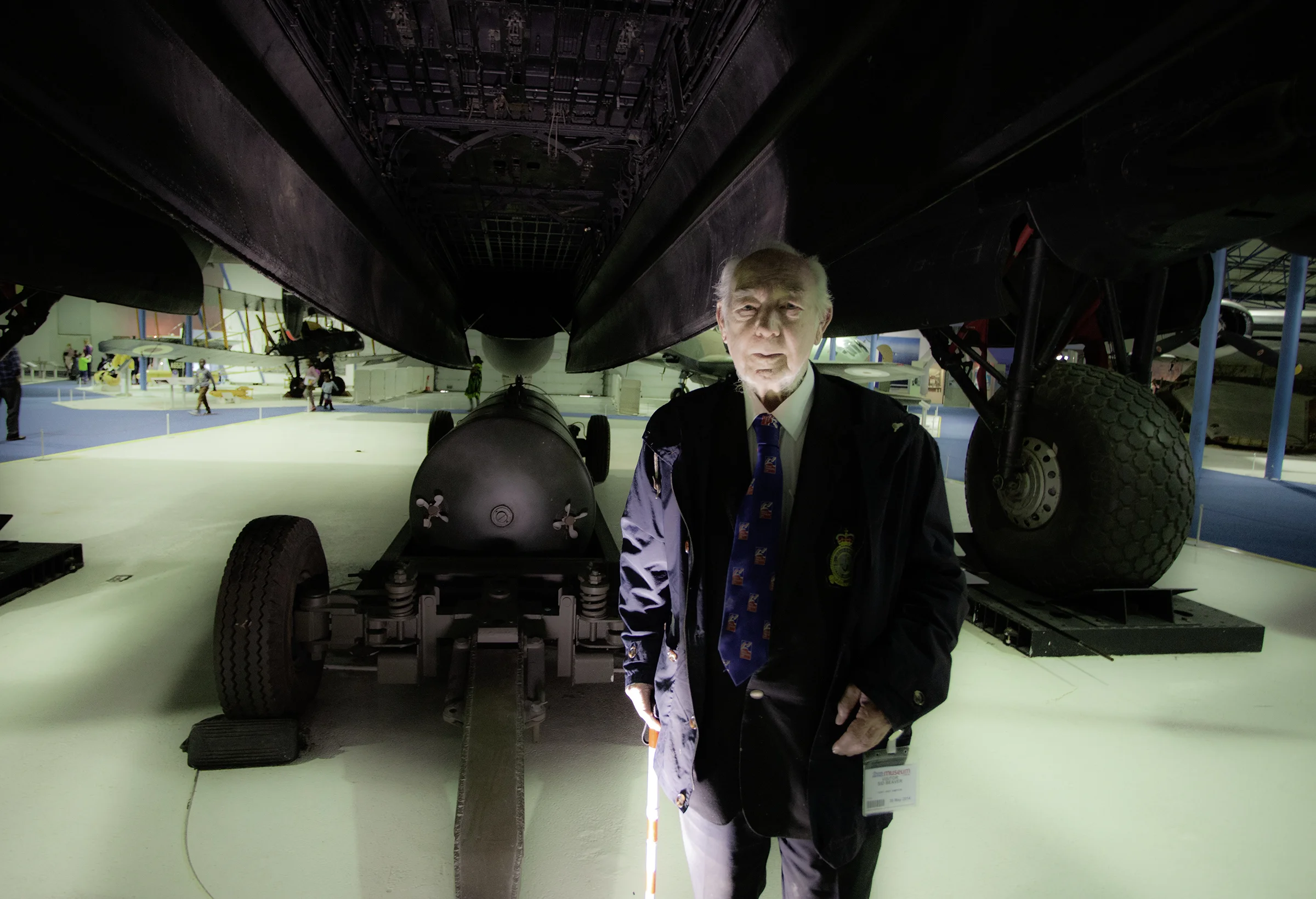
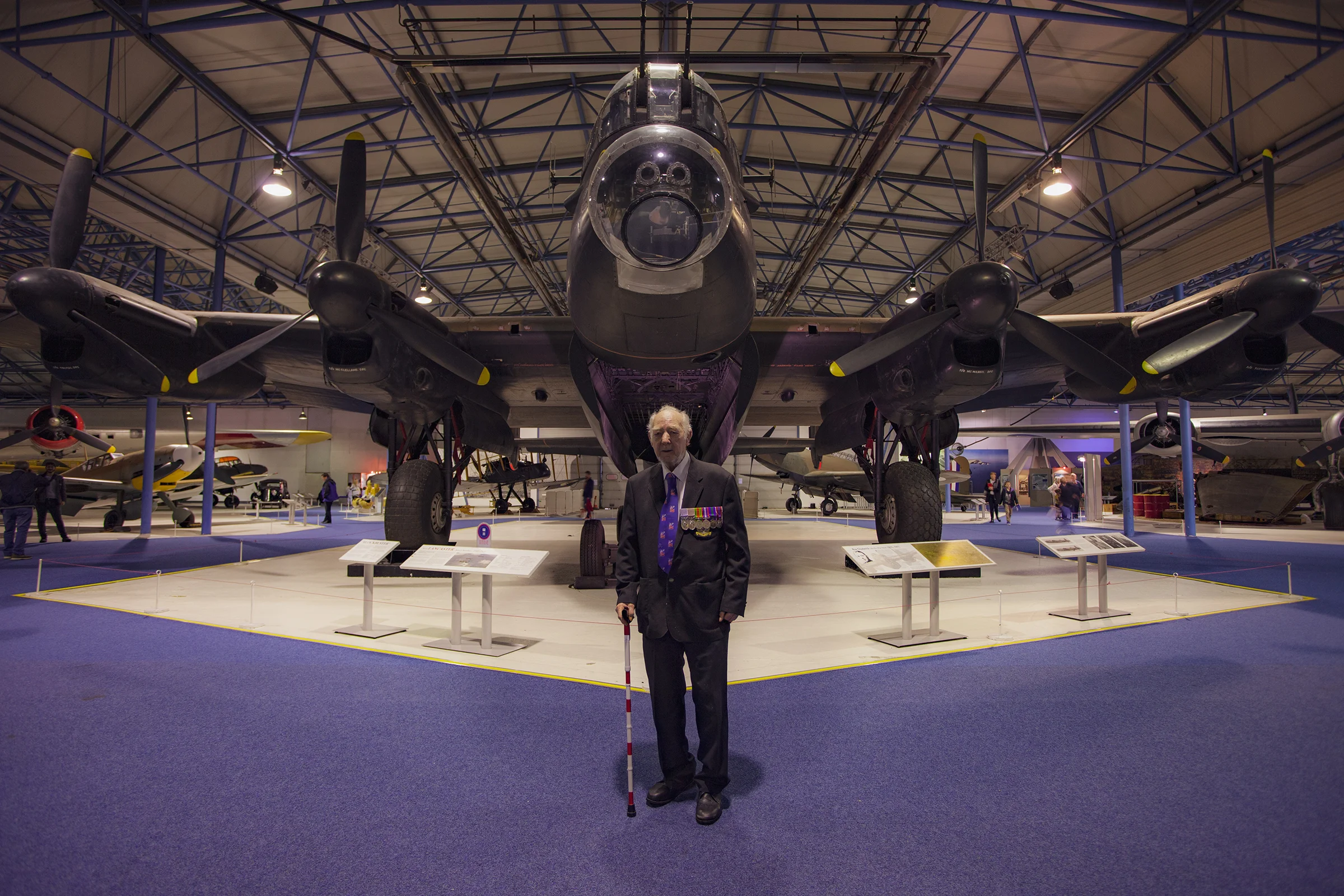
There were a few things on my mind that day: traffic jams around London for one, and how Sidney was going to feel walking around the museum, and whether it would bring back memories that might upset him. I was also excited for him; I really wanted to give him the opportunity of seeing another Lancaster. My expectations were exceeded about twenty minutes after we arrived. On arrival I got Sid's RAF jacket out and we put it on, along with his medals, and I was thinking to myself, this is one of the best things I have ever done. We were welcomed in by Andy and, after a quick refreshment break, walked through the collection, Andy explaining the planes on view to Sid while I just watched the two of them walking together in conversation.
One thing I had noticed Sidney struggle with since I met him was his eyesight; at times he clearly could not see well when looking at the books and photographs he would show me at his home. But his eyesight was spot on at the museum. As I walked behind them both, meandering down an aisle between aircraft, Sidney stopped, looked up and stared at a plane hanging from the roof. "Why have you painted my plane a different colour?" he said in a stern manner. Andy and I looked at each other, trying to understand what the issue was. All I can remember is Andy asking Sidney what he was concerned about; neither of us could have imagined what would happen next. "This is my aircraft from North Africa. Why has it been painted a different colour?" It is these moments in life you would never imagine happening, but there it was: Sidney's plane, now part of one of the biggest aircraft collections in Britain. Sidney was spot on. It was his aircraft, and when he gave all the details of the plane's history I could see Andy's astonishment. The curator then went on to try to soothe Sid's disgust that his plane had been painted a colour that was not to his taste.
There were so many stories from that day: people's amazement at seeing a pilot from WW2, being there personally to experience everything that was going on, seeing Sidney's face when people asked for photographs, and of course seeing Sid standing under an aircraft he had once flown during the war.
For me personally, it was walking Sid under the Lancaster bomber: looking at a plane and a man who had both seen so much. I am still a little lost for words about it all, even as I write this.
Final Thoughts
Ten years on, and now finished, I still can’t believe that this was a journey of my own life, a project I had put together just because of the inspiration these three men had given me. It is more than that, though: it has made me aware that there are so many more stories that need to be understood, and this is a journey that for me is still under way. The next story is the Holocaust: people’s lives, experiences, fears and tears during a time when the three men above were on their own journey of the same emotions.